
 Agricultural Products
Corn Silage
Pakistani corn silage in bale and bulk forms for dairy, cattle and livestock feeding
Verified Supplier
Export Ready
Pakistan Origin
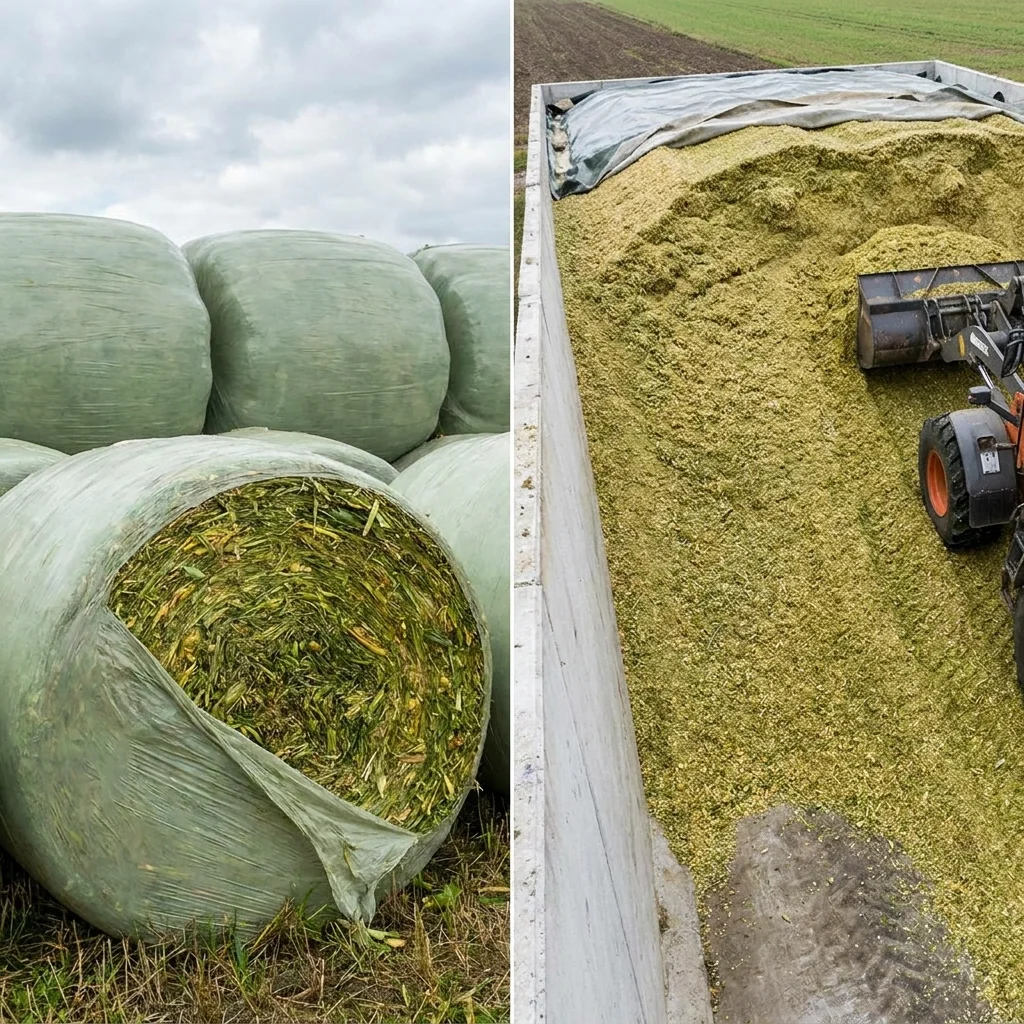
Pakistani corn silage in bale and bulk forms for dairy, cattle and livestock feeding
Corn Silage
Corn silage from Pakistan. Bale silage and bulk silage. High energy, fermented forage. Price on inquiry, shipped from Karachi.
High Energy Forage
Properly Fermented
Bale and Bulk Forms
Year-Round Production
Product Details
Corn Silage from Pakistan
Corn silage is made by harvesting the entire maize plant at the late dough to early dent stage (30-35% dry matter), when the grain has developed but the stalk and leaves still contain significant moisture and digestible fibre. The harvested plant is chopped into 10-20 mm pieces by a forage harvester, then immediately compacted and sealed under anaerobic conditions. Natural lactic acid bacteria ferment the plant sugars into lactic acid over 3-4 weeks, dropping the pH to 3.8-4.2 and preserving the forage for 12+ months. The result is a sweet-smelling, highly palatable, energy-dense feed that dairy and beef operations rely on as a primary forage source.
Specifications
Material: Whole-plant maize silage (fermented)
Dry Matter: 30-38%
Crude Protein: 7-9% (DM basis)
Starch: 25-35% (DM basis)
NDF (Neutral Detergent Fibre): 38-48% (DM basis)
ADF (Acid Detergent Fibre): 22-30% (DM basis)
ME (Metabolizable Energy): 10-11 MJ/kg DM
TDN (Total Digestible Nutrients): 65-72%
pH: 3.8-4.2 (properly fermented)
Lactic Acid: 4-7% (DM basis)
Butyric Acid: < 0.1% (quality indicator)
Chop Length: 10-20 mm
Colour: Olive-green to yellow-green
Odour: Sweet, slightly acidic, fermented
Two Forms Available
Bale Silage
Round bales, 400-600 kg each
Chopped maize wrapped in 4-6 layers of UV-resistant stretch film immediately after baling
Each bale is a self-contained, sealed fermentation unit
Ideal for export: individual units are easy to handle, transport, and stack in containers
Shelf life: 12-18 months if film remains intact
Typical container load: 38-44 bales per 40ft container (18-22 MT)
Bulk Silage
Loose chopped maize compacted in pit silos, bunker silos, or silage bags at the farm
Covered with plastic sheeting and weighted to maintain anaerobic conditions
Most common form for domestic dairy farm supply
Available for export in bulk containers with silage bags or lined containers
Most cost-effective per tonne, but requires more specialized loading and handling
Industrial Uses
Dairy cattle feeding: Corn silage is the primary forage in modern dairy rations, typically comprising 40-60% of the total mixed ration (TMR) on a dry matter basis. Its high energy (starch from grain) and digestible fibre (from stalk and leaves) support high milk production, body condition, and rumen health
Beef cattle feeding: Corn silage is used as the main forage in beef feedlot rations, backgrounding programs, and cow-calf operations. Its high energy density supports efficient weight gain and finishing
Buffalo feeding: In Pakistan and South Asia, corn silage is increasingly adopted by commercial buffalo dairy farms as a replacement for traditional green fodder and wheat straw, improving milk yield and fat content
Sheep and goat feeding: Corn silage is used as a supplementary forage for sheep and goat operations, particularly during dry seasons when fresh forage is scarce
Biogas production: Corn silage is one of the most efficient feedstocks for anaerobic digestion in biogas plants, producing methane for electricity generation and heating
Quality Assurance
Each lot is tested for dry matter, crude protein, starch, NDF, ADF, pH, lactic acid, butyric acid, and mycotoxin levels. Properly fermented silage should have a pH of 3.8-4.2, sweet acidic smell, and no visible mould. Pre-shipment samples are provided for buyer evaluation. Bale integrity (film condition, absence of punctures) is inspected before loading.
Why Source From Pakistan?
Pakistan is one of Asia’s major maize producers with two growing seasons per year, enabling year-round corn silage production. The country’s rapidly growing commercial dairy sector has driven significant investment in silage production infrastructure, including forage harvesters, bale wrappers, and bunker silos. Pakistani corn silage offers competitive pricing compared to European and Australian silage, with established container shipping logistics through Karachi port. Growing demand from dairy and livestock operations in the Middle East (UAE, Saudi Arabia, Qatar, Oman, Bahrain, Kuwait) and East Asia creates a natural export corridor for Pakistani silage. DaaTrade manages sourcing from verified silage producers, quality testing, bale inspection, container loading, documentation and shipment through one export desk.
Specifications
Detailed specifications are available on request. Send us your requirement and our export desk will share them.
Packaging & Shipping
Packaging
Bale Silage:
Round bales, 400-600 kg each, wrapped in 4-6 layers of UV-resistant stretch film
Bales stacked and secured in 40ft containers
Film colour: green, white, or black (UV protection)
Bulk Silage:
Loaded in silage bags placed inside 20' or 40' containers
Lined containers with sealed cover to maintain anaerobic conditions
Requires careful loading to maintain compaction and prevent aerobic spoilage
Shipping
Loading port: Karachi Port or Port Qasim. Containerized shipment. Bale silage is the preferred export form due to ease of handling and individual seal integrity. Typical load: 38-44 bales per 40ft container (18-22 MT). Silage must be loaded carefully to avoid puncturing film wrapping. Incoterms: FOB, CFR, CIF. Documents: Commercial Invoice, Packing List, Certificate of Origin, Certificate of Quality (nutritional analysis), Phytosanitary Certificate, Fumigation Certificate (if required), Bill of Lading.
Frequently Asked Questions
A: Bale silage consists of individual round bales (400-600 kg each) wrapped in 4-6 layers of stretch film. Each bale is a sealed fermentation unit that can be handled, transported, and opened individually. Bale silage is the preferred form for export and smaller dairy operations. Bulk silage is loose chopped maize compacted in pits, bunkers, or silage bags, and is the most cost-effective form per tonne. For export, bale silage is recommended due to easier container loading, individual seal integrity, and reduced spoilage risk during transit.
A: Properly fermented corn silage has a pH of 3.8-4.2, a sweet, slightly acidic smell (like pickles or sauerkraut), olive-green to yellow-green colour, and no visible mould. The nutritional analysis should show lactic acid at 4-7% of dry matter and butyric acid below 0.1% (high butyric acid indicates poor fermentation). We test every lot for pH, lactic acid, butyric acid, and mycotoxins. Bales are visually inspected for film integrity before loading, as even a small puncture can allow air entry and spoilage.
A: A standard 40ft container holds approximately 38-44 round bales depending on bale size (400-600 kg each), giving a total load of 18-22 MT. Bales are stacked two or three layers high and secured to prevent shifting during transit. For large volumes (100+ MT per month), we arrange scheduled monthly container shipments. Please specify your monthly volume requirement and we will recommend the most cost-effective supply plan.
Agricultural Products
 Agricultural Products
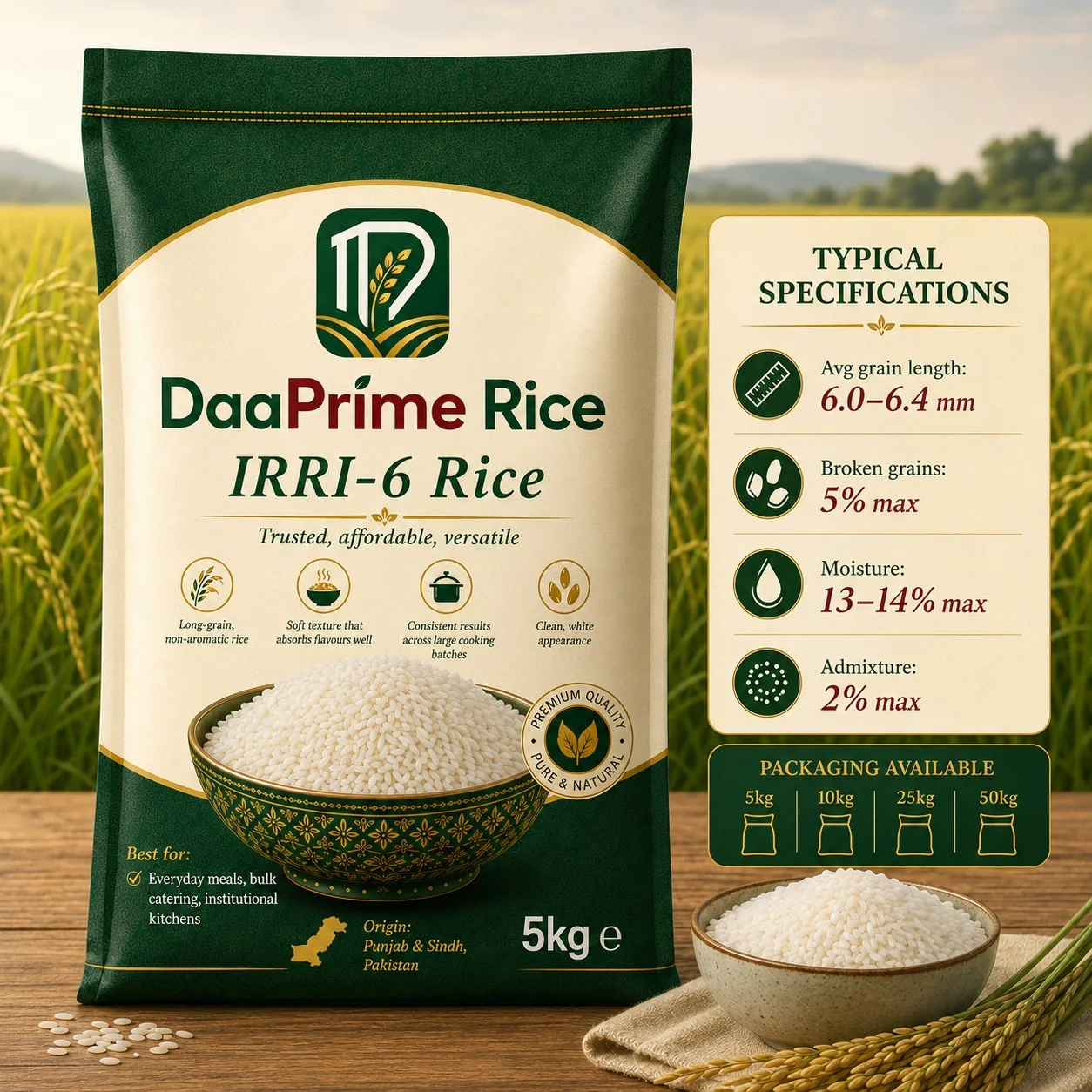
DaaPrime IRRI-6 Rice
DaaPrime IRRI-6 non-basmati rice. Long grain, soft texture, clean whit...
Inquire Now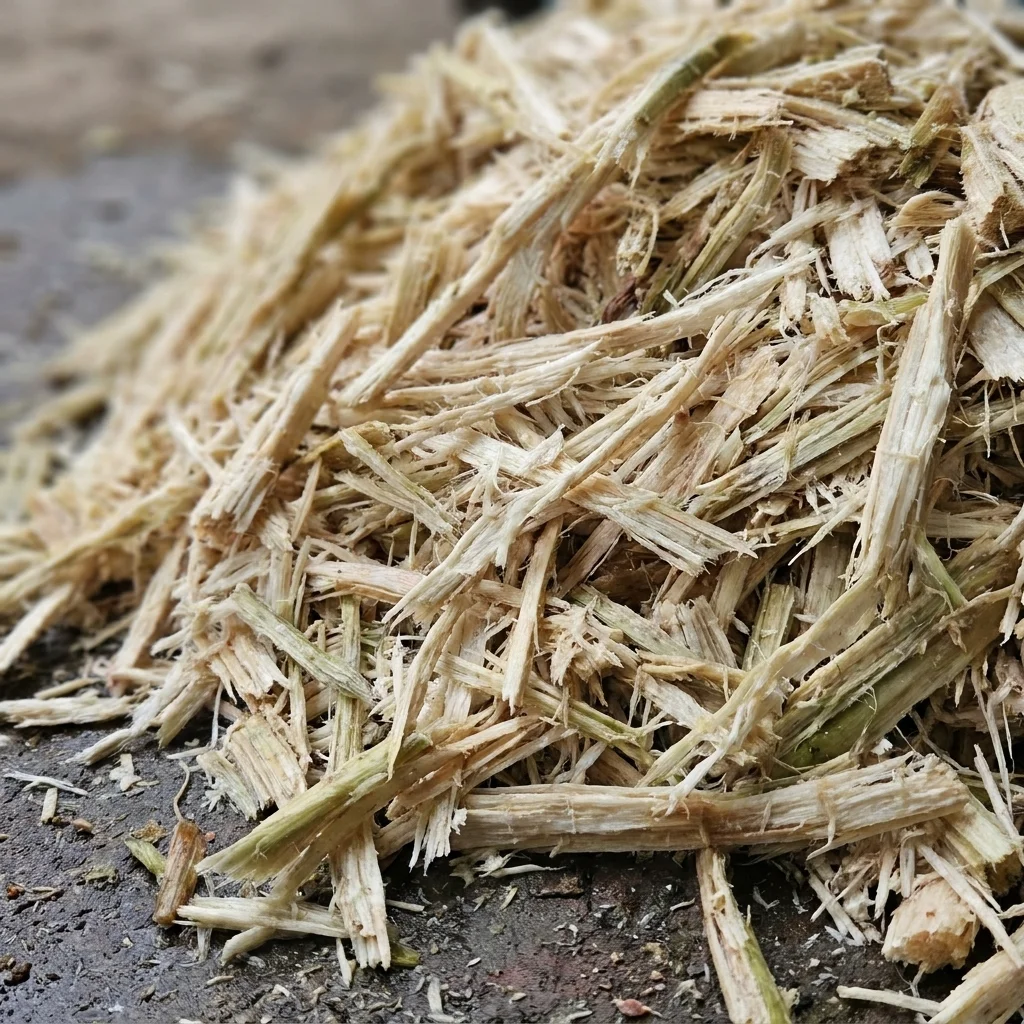 Agricultural Products
Sugarcane Residues
Sugarcane residues (bagasse) from Pakistan. Biomass fuel and industria...
Inquire Now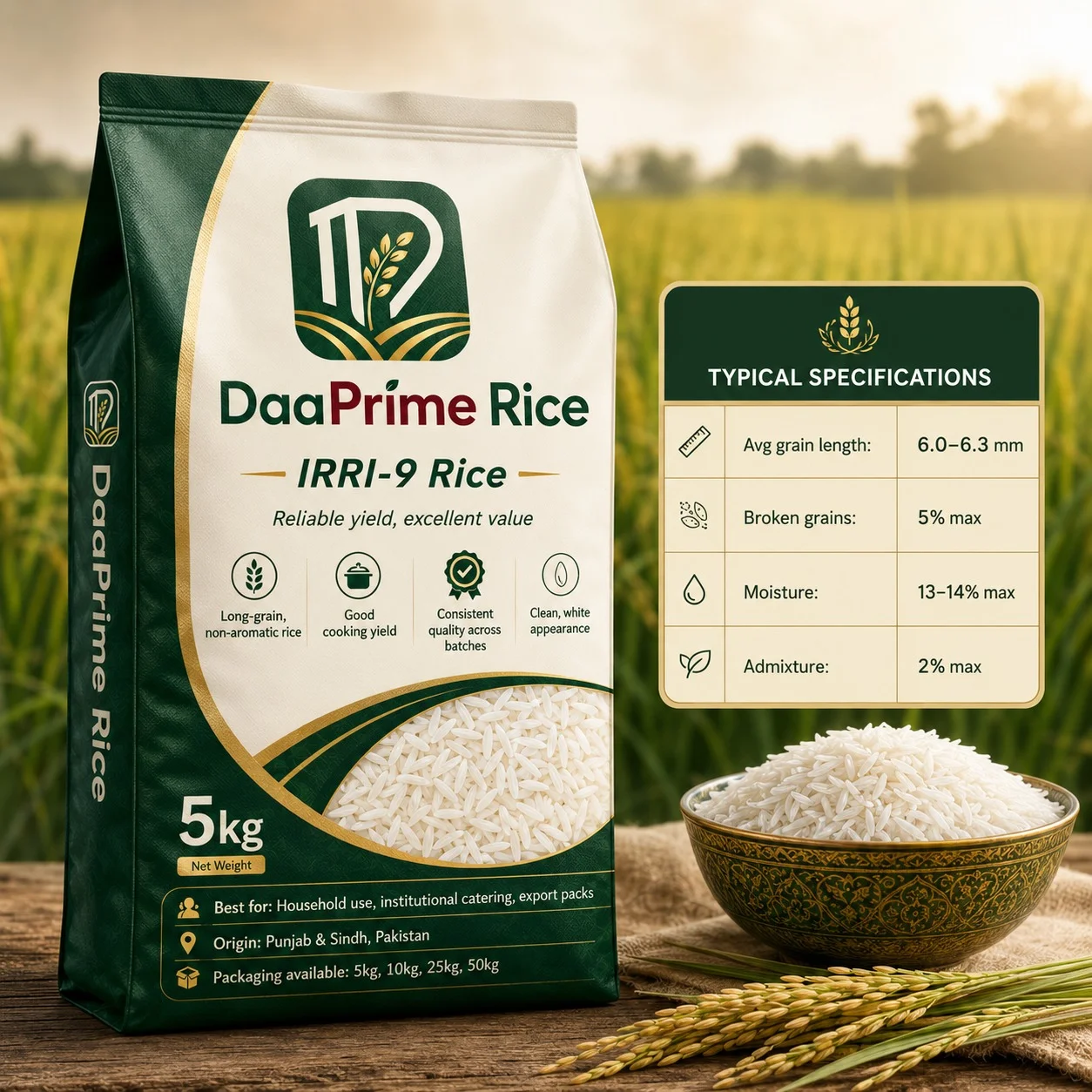 Agricultural Products
DaaPrime IRRI-9 Rice
DaaPrime IRRI-9 non-basmati rice. Long grain, good cooking yield, clea...
Inquire NowVerified
SuppliersNo
unconfirmed contacts
Global ReachFrom
Pakistan to
your destination
Fast ResponseWithin
24
hours
Looking for a product from Pakistan?
Submit a Buying Requirement at DaaTrade.com
Submit Requirement