
Water Softener Salt: Types, Differences and How to Choose
Limescale on taps, dull-looking laundry and soap that refuses to lather are the usual signs of hard water, and softener salt is how most households and businesses deal with it. Not all softener salt is the same, though. Choosing the wrong type can mean extra maintenance and less efficient softening than you need.
How Water Softeners Use Salt
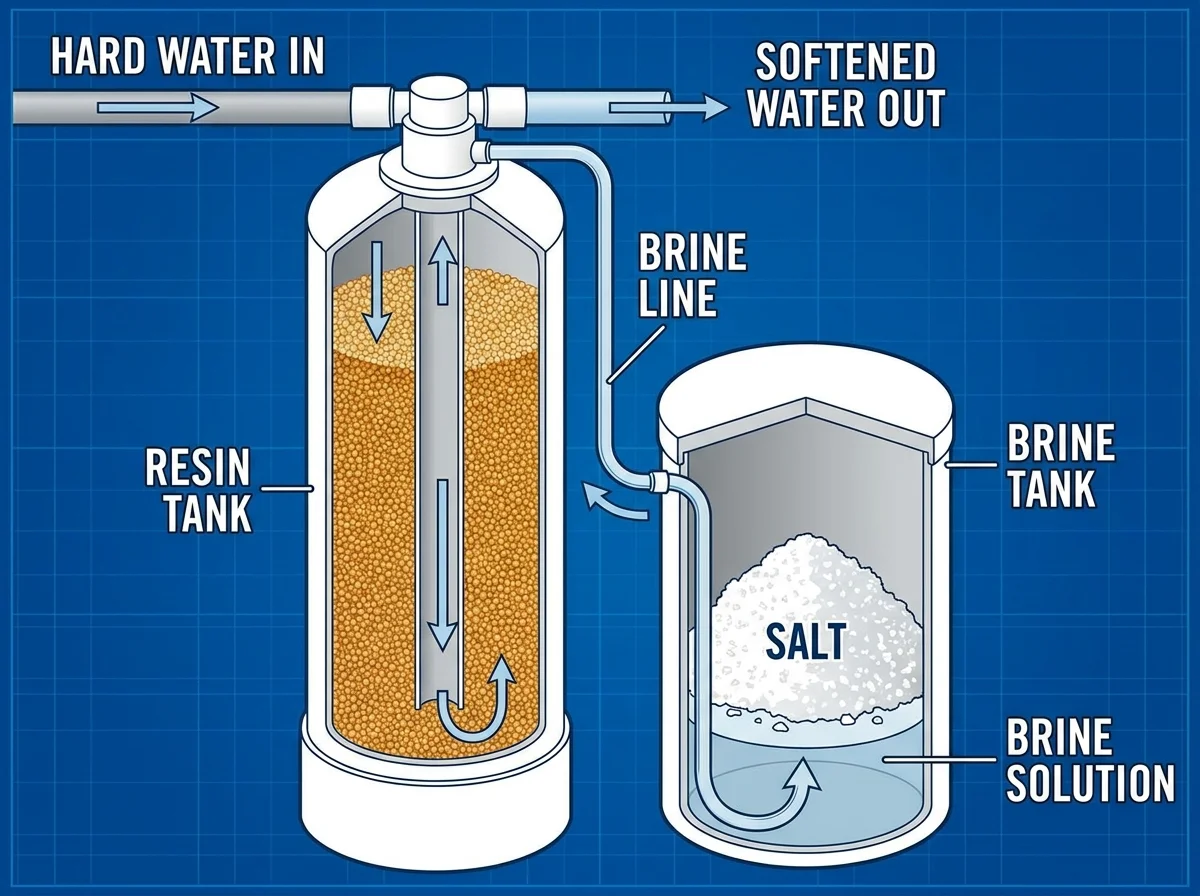
A water softener works by ion exchange. Resin beads inside the unit capture the calcium and magnesium ions that cause hardness and swap them for sodium ions. Eventually the resin fills up with hardness minerals and has to be regenerated.
This is where the salt comes in. A concentrated brine solution flushes the resin, replacing the captured calcium and magnesium with fresh sodium so the system can carry on softening water.
The Main Types of Softener Salt
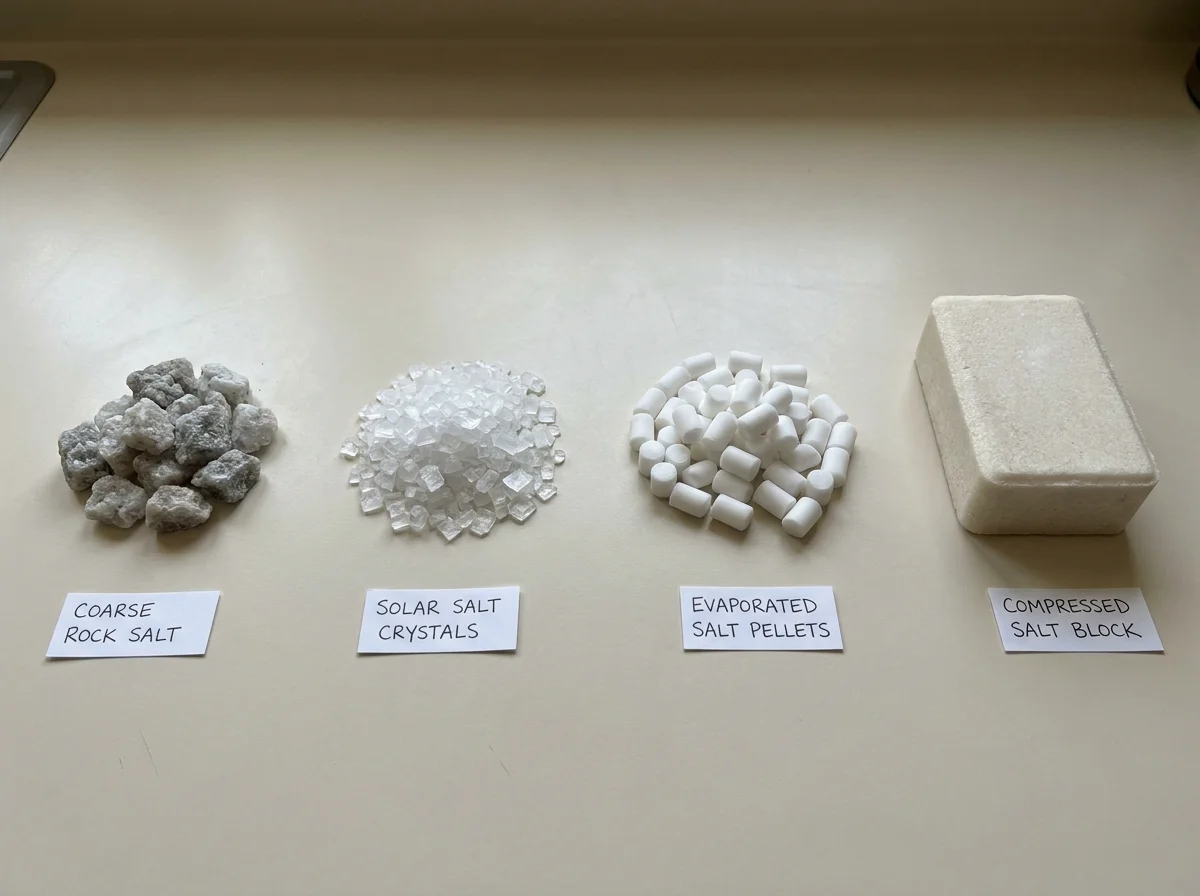
• Rock salt. Mined directly from underground deposits, it is the least refined and least expensive option. It carries more impurities, including calcium sulfate, which can build up as sediment in the brine tank over time.
• Solar salt. Produced by evaporating seawater with sun and wind, it is generally around 99.6% pure and is sold as crystals or pellets. It sits in the middle ground between cost and performance.
• Evaporated salt. The most refined option, made by mechanically evaporating brine. It typically reaches 99.9% purity or higher, leaves the least residue in the tank and causes the fewest maintenance problems. It is usually sold as pellets.
• Block salt. Compressed blocks used in tanks with raised water levels. Softener manufacturers recommend it less often today, and the blocks must stay fully submerged to avoid bridging.
Salt Crystals vs Pellets
Solar and evaporated salt are generally available as either crystals or pellets. Pellets are compressed, so they dissolve more slowly and predictably. That usually gives more consistent brine strength and fewer bridging problems.
Bridging is when a hard crust forms above the water level in the brine tank and stops the salt beneath it from dissolving properly. Crystals dissolve faster but are more prone to it, particularly in high-usage households.
How to Choose the Right Softener Salt
For most residential softeners, evaporated salt pellets give the best balance of performance and low maintenance, although they cost more than rock or solar salt. Households with very hard water or heavy water use tend to gain the most from the purity and consistency of evaporated salt. Lighter users in areas with moderately hard water can often manage comfortably with the lower cost of solar salt.
Considerations for Commercial and Bulk Buyers
Commercial and industrial buyers purchasing in volume should also look at packaging format, whether standard bags or bulk totes, and at batch-to-batch consistency. Uneven salt purity can lead to unpredictable softener performance across a facility with several units.
Saremco Impex supplies water-softening grade salt, including rock and solar-evaporated options, in bulk and bagged formats for residential distributors and commercial buyers. To discuss volumes and specifications, reach out through Saremco Impex.