
Sella Rice vs Steam Rice: Which One Should You Import?
When sourcing basmati for export markets, the choice between sella and steam rice comes up often, and the answer is not always obvious. Both are widely traded, both start from the same raw basmati paddy, and both are available in 1121 and Super Kernel. But the processing method changes the product significantly, and choosing wrongly can leave you with something your buyers or end markets do not actually want.
Understanding the Processing Difference
The difference comes down to parboiling.
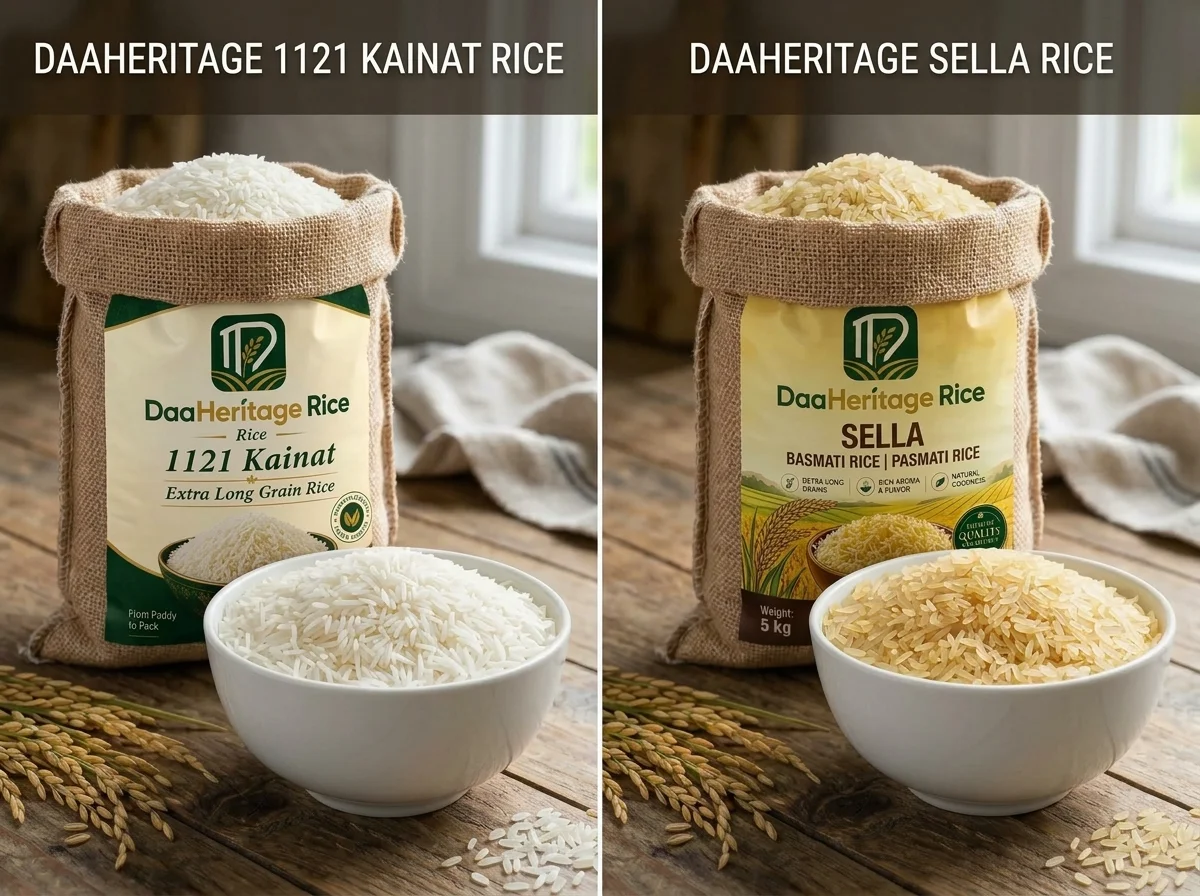
Steam basmati rice is processed with minimal intervention. The paddy is cleaned, lightly steamed or simply milled depending on the grade, and packed as white rice. The grain keeps its natural white colour and softer texture. It cooks relatively quickly and has a delicate, traditional basmati character.
Sella rice (also spelled Sela) is parboiled before milling. The paddy is soaked in water, steamed under pressure and dried before the husk and bran are removed. This gelatinises the starch inside the grain, hardening it and turning the colour from white to creamy or golden. After cooking, sella is noticeably firmer, holds its shape better and has a longer shelf life.
Golden sella is a sub-category with a more pronounced golden colour, produced by slightly more intensive parboiling. It is the same variety and process, and the colour difference is mainly aesthetic.
How Sella and Steam Rice Cook Differently
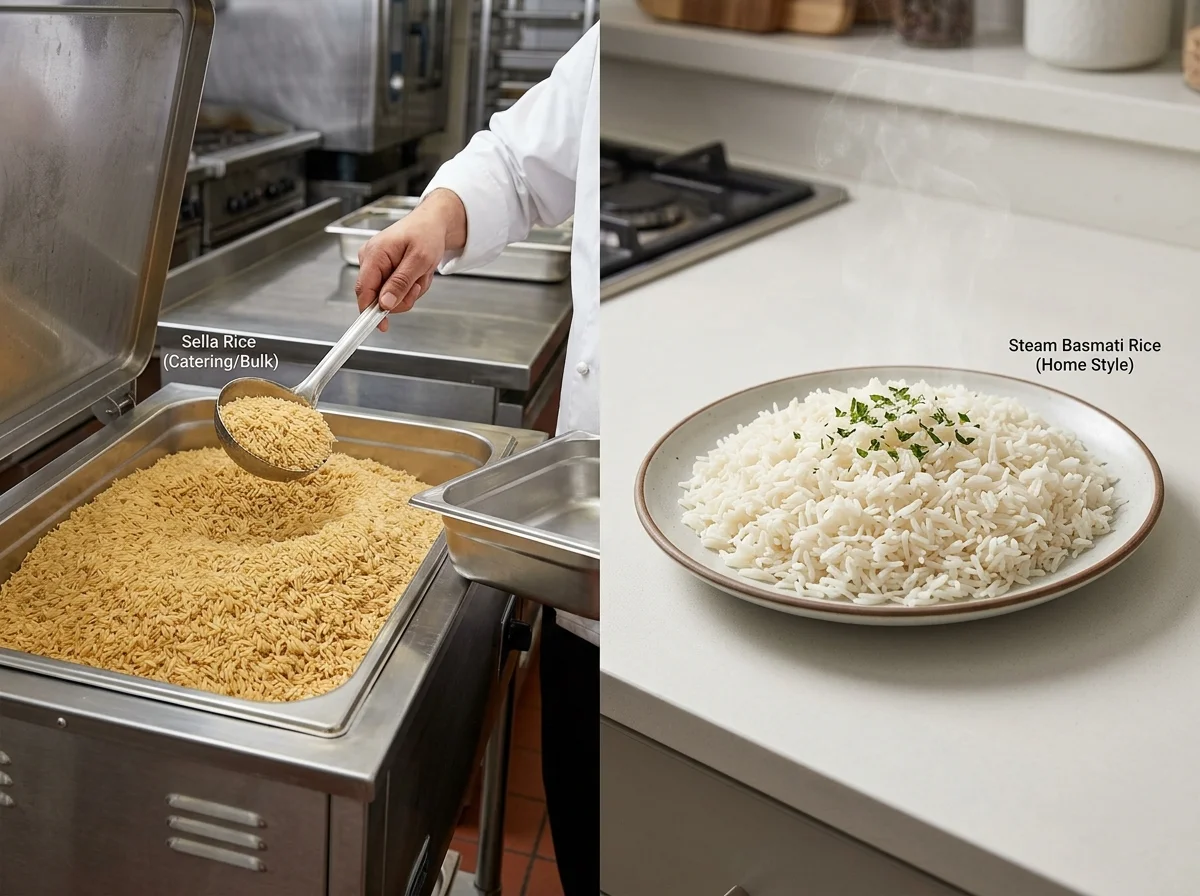
This is where the practical difference matters for your buyers. Steam basmati cooks into softer, more tender grains, closer to the texture people expect from basmati in South Asia: delicate, fluffy and lightly fragrant. It suits home cooking and retail packs aimed at consumers who regularly make biryani, pulao or other rice dishes.
Sella, because the starch has been partly set, cooks into firmer, more defined grains. It is harder to overcook and performs well in high-volume settings such as catering kitchens, restaurants and institutional food supply, where rice may sit in warmers or be prepared in large batches. The grains stay separate and do not clump, which matters when you cook at scale.
Shelf Life and Logistics
Parboiling extends shelf life. Sella is generally more stable in storage and more resilient on long journeys, particularly in humid climates or during container sea freight. For buyers supplying tropical markets or regions with limited cold chain infrastructure, that durability is a practical advantage.
Steam basmati needs more careful storage to preserve aroma and prevent moisture uptake. Sealed PP or non-woven bags with moisture barriers are important, and you should confirm storage recommendations with your supplier.
Market Preferences
Broadly speaking, preferences vary by region:
• Middle East: strong demand for both, with sella and golden sella especially popular in institutional and bulk cooking. The UAE, Saudi Arabia and Iraq are major buyers of sella.
• UK and EU: retail buyers tend to favour steam basmati in branded or private label packs. According to recent trade data, Pakistan holds a substantial share of the EU and UK basmati brown rice market, where quality standards are stringent.
• Africa: sella and golden sella have strong penetration in several markets, partly because of their longer shelf life and firm cooking texture.
• North America: retail packs of steam basmati dominate, with demand largely from South Asian diaspora communities.
Which One Should You Import?
Start with your end market and buyer requirements. If your buyers are retail distributors selling to home cooks, steam basmati is likely the right fit. If you supply catering operations, hotels, restaurants or institutional buyers, sella is usually more appropriate. If you are entering a new market and are unsure of preferences, ask for small samples of both before committing to a bulk order.
Sourcing Sella and Steam Basmati from Pakistan
Saremco Impex supplies both sella and steam basmati in 1121 and Super Kernel varieties, for bulk and private label supply. For sourcing enquiries, visit saremcoimpex.com.