
Salt Grades Explained: Food, Industrial and Cosmetic Grade
Not all salt leaving a mine or evaporation pond ends up on a dinner table. Salt is sorted into grades according to its intended use, and each grade carries different purity requirements, testing standards and pricing. For buyers, the distinction matters because ordering the wrong grade for an application can mean compliance problems or wasted cost.
Food Grade Salt
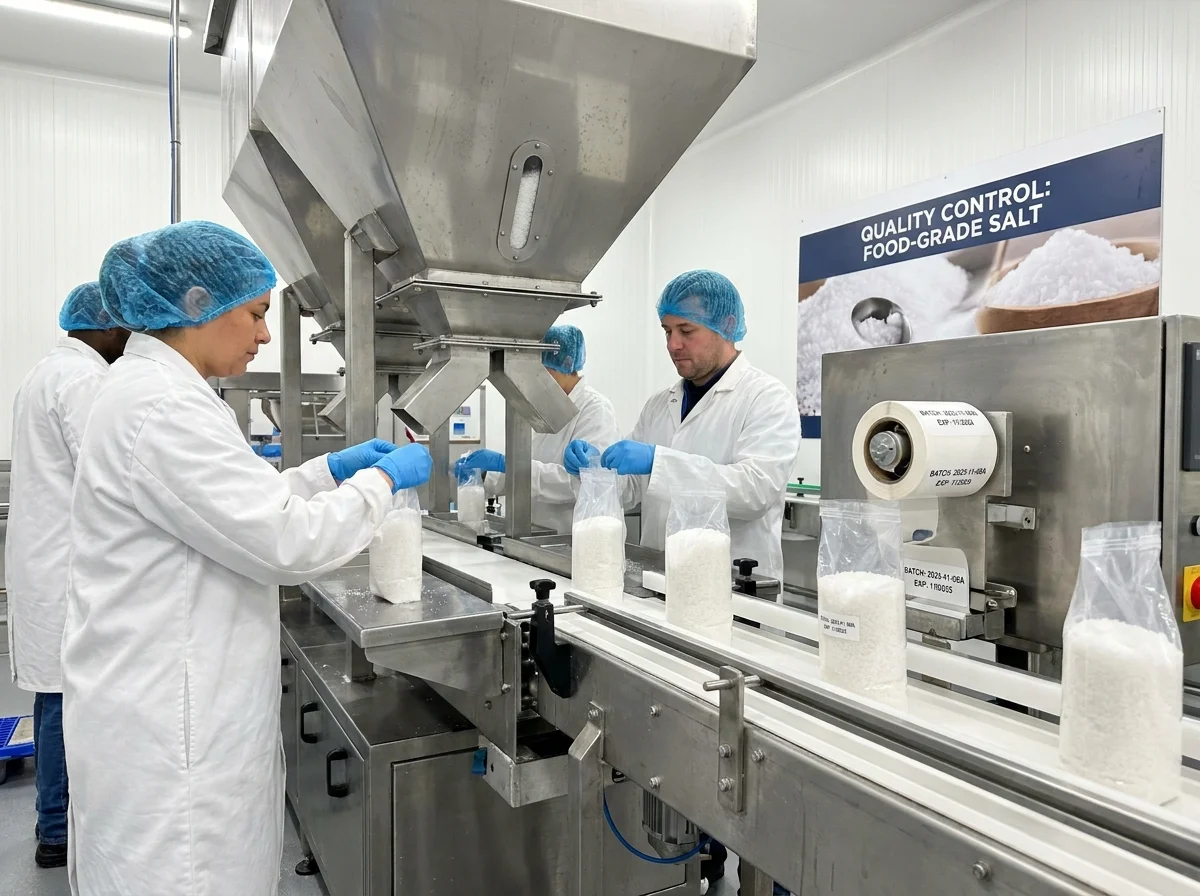
Food-grade salt is held to the highest purity and safety standards because it is meant for direct human consumption. It must meet limits on heavy metals, insoluble matter and microbiological contamination set by food safety regulations in the destination market. It is typically processed, washed and packaged under hygienic conditions, with traceability back to the source batch.
There is further variation within food grade: iodised or non-iodised, fine or coarse, refined or minimally processed rock or sea salt. All of it must clear the same basic safety bar before it can be labelled for food use.
Industrial Grade Salt
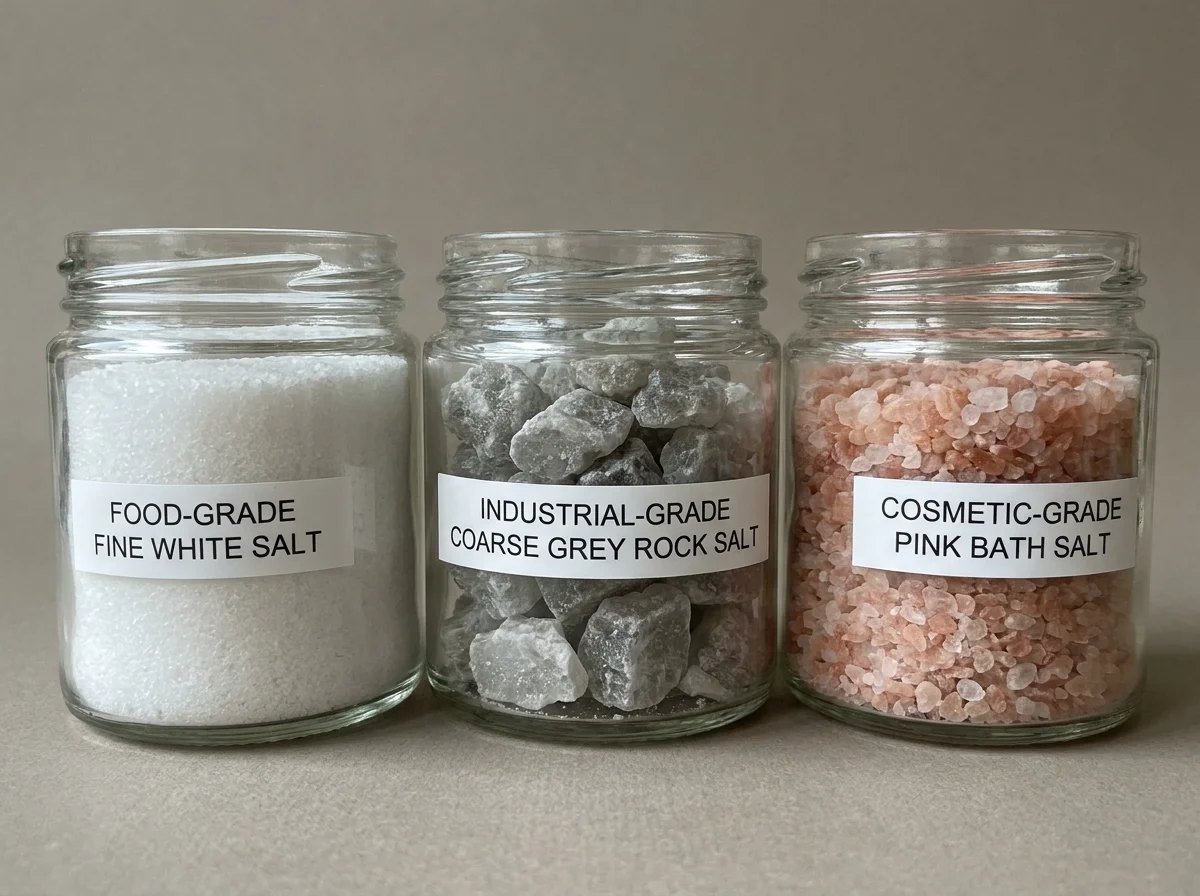
Industrial-grade salt does not have to meet food-safety purity standards, because it is destined for uses such as chemical manufacturing, de-icing or water treatment rather than consumption. It can contain a higher proportion of impurities, such as calcium sulfate or insoluble minerals, without affecting how it performs. For road de-icing, unrefined rock salt is often preferred precisely because it is cheaper and the impurities make no difference to the job.
The range of industrial uses is wide, from de-icing and water-softener regeneration to chlor-alkali chemical feedstock. As broader overviews of sodium chloride’s industrial applications show, purity and particle-size requirements differ meaningfully depending on the end use.
Cosmetic Grade Salt
Cosmetic-grade salt sits between the two. It is used in bath salts, body scrubs and spa treatments, where the salt touches the skin but is not eaten. It generally needs to meet cleanliness and consistency standards suited to cosmetic manufacturing, meaning it is free of visible contamination and processed under reasonably controlled conditions. It does not necessarily need the full battery of food-safety testing required for edible salt.
Why the Right Salt Grade Matters for Buyers
Ordering industrial-grade salt for a food application is more than a quality risk. It can be a regulatory violation with real consequences at customs or with a buyer’s own compliance team. The reverse is also wasteful: paying for food-grade purity testing and documentation on salt destined for de-icing or industrial use adds cost with no functional benefit.
• Confirm which grade you need, based on end use, before requesting quotes.
• Ask suppliers directly whether their food-grade salt is tested and certified to the relevant standard for your destination market.
• Do not assume a lower price automatically means a lower grade, or the reverse. Always ask for the grade specification and supporting documentation.
Saremco Impex supplies salt across food, cosmetic and industrial grades, with documentation matched to each grade’s intended use. To confirm the right grade for your application, you can contact the team through the website.