
Rice Milling Process: From Paddy to Export-Ready Grain
Every bag of milled rice that reaches an overseas buyer began as paddy, the rough, husk-covered grain harvested straight from the field. Knowing how that paddy becomes the polished, uniform rice seen on supermarket shelves helps buyers make sense of grading terms and pricing. It also explains why quality can differ between suppliers who are, on paper, selling the same variety.
Why Paddy Needs to Rest Before Milling
Freshly harvested paddy is dried to bring its moisture content down to a safe storage level, typically around 12 to 13 percent, before it goes anywhere near a mill.
Many mills then age the paddy for a period after drying. Resting improves how the grain behaves in milling and in the pot. Aged basmati in particular is prized for cooking up firmer and less sticky, which is why some suppliers hold stock for months before processing it.
The Core Stages of Rice Milling
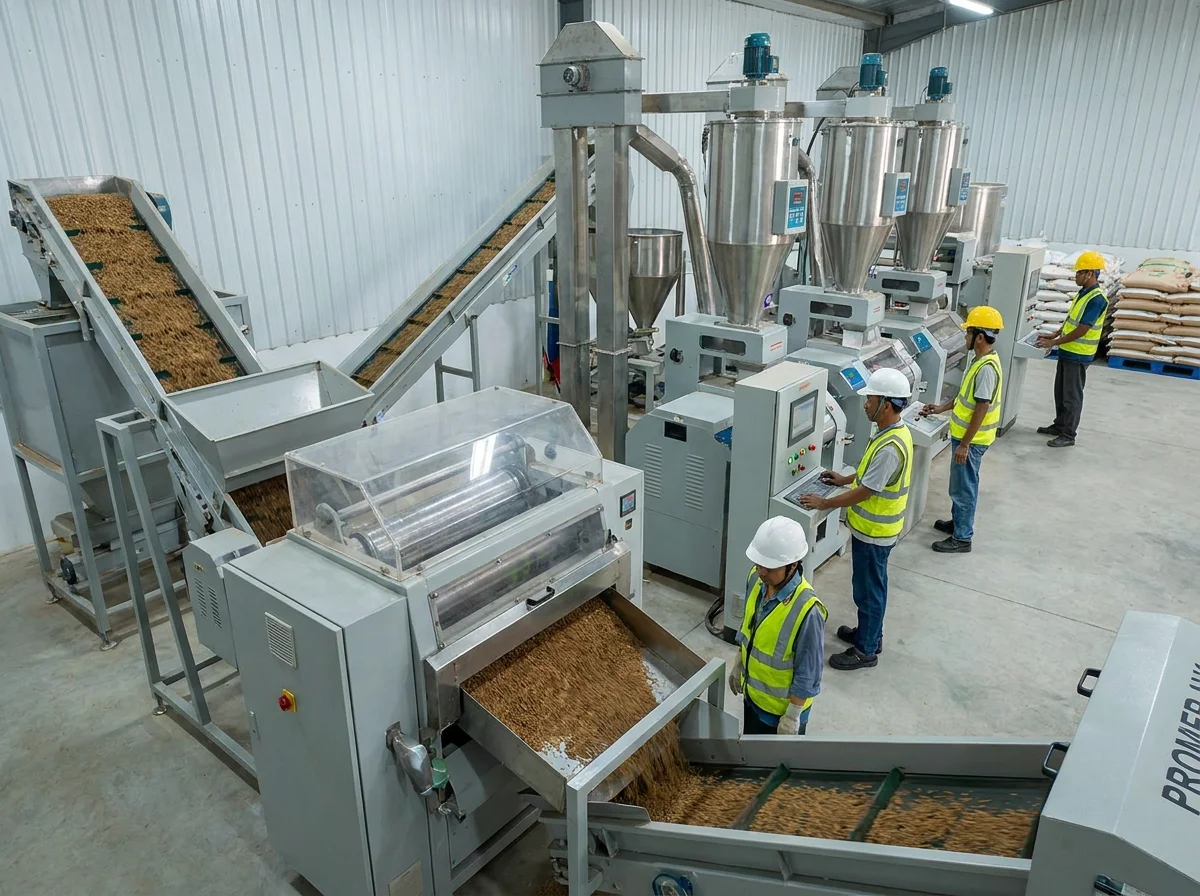
Commercial rice mills do not rely on a single process. Paddy passes through a series of mechanical stages, and while the equipment varies with the size of the mill, the sequence is broadly the same:
• Pre-cleaning: removing straw, stones, sand and immature grains before the paddy reaches the huller.
• Husking (dehusking): taking off the outer husk to produce brown rice, typically with rubber-roll hullers.
• Paddy separation: separating any remaining unhusked paddy from the brown rice so it can go through a second pass.
• Whitening and polishing: removing the bran layers through friction and abrasion to produce white rice, then polishing the surface for appearance.
• Grading and sorting: separating whole (head) grains from broken pieces, usually by length, and sifting out any remaining fine impurities.
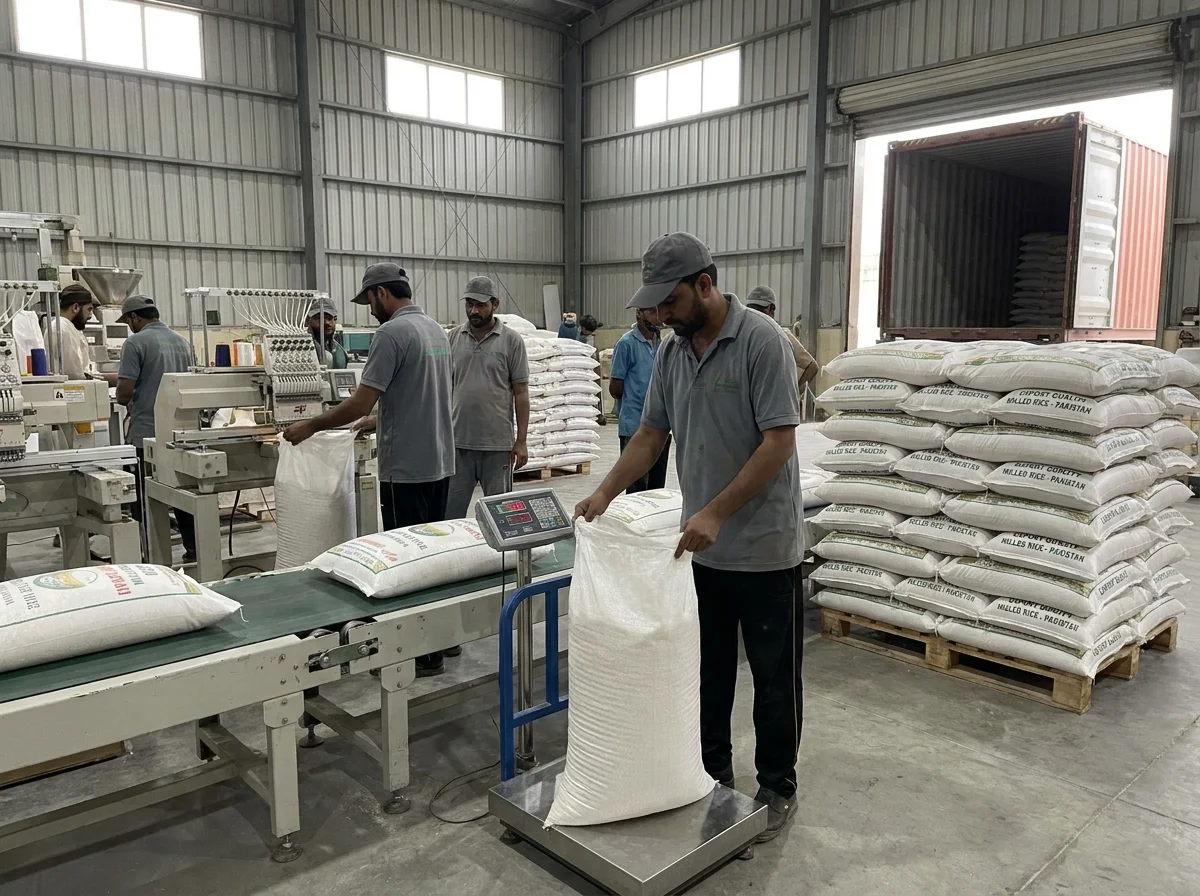
• Blending, weighing and bagging: combining head rice with an agreed proportion of brokens where required, then packing to the buyer’s specification.
According to the International Rice Research Institute (IRRI), a typical paddy grain is roughly 20 percent husk, 8 to 12 percent bran depending on the milling degree, and around 68 to 72 percent milled rice by weight. Those proportions explain why milling yield is watched so closely by mills and buyers alike.
Why Milling Degree and Broken Percentage Matter to Buyers
Milling degree describes how much of the bran layer has been removed. A lightly milled grain keeps more of its bran, nutrients and colour. A highly polished grain looks whiter and stores slightly longer, but loses some of the bran’s nutritional content. Buyers supplying retail markets that expect a bright, uniform white grain will specify a higher milling degree, while some health-focused or regional markets specifically ask for lightly milled or brown rice.
Broken percentage deserves the same attention because it affects both price and cooking behaviour. A batch with many broken grains cooks and absorbs water differently from one that is mostly whole kernels, even when both are the same variety.
From Mill to Container
Once milling and grading are finished, rice destined for export is typically re-cleaned, weighed and packed to the buyer’s packaging specification. That might mean woven PP bags, vacuum packs or bulk container loading.
Reputable mills run a final quality check on moisture, broken percentage and foreign matter before sealing bags for shipment, and can usually issue a matching quality certificate to travel with the shipping documents.
Saremco Impex works directly with rice mills across Pakistan’s growing regions and oversees milling specification, grading and quality checks before export, so buyers receive rice that matches the agreed sample. If you want a partner who manages the process from paddy through to a container at the port, you can get in touch to discuss your specification.