
Rice HS Code Guide for Importers and Exporters
Getting the HS code right on a rice shipment is more than paperwork. The code determines the duty rate, any quota restrictions, and whether a preferential tariff certificate applies. A misclassification can lead to reclassification at the border, extra duties and delays.
This guide explains how rice is classified under the Harmonised System, what each subheading covers, and what importers and exporters should check when they declare a shipment.
What Is an HS Code?
The Harmonised System (HS) is an international nomenclature for classifying traded goods, maintained by the World Customs Organization (WCO). Every category of traded product has a numeric code. The first six digits are harmonised, so they mean the same thing in every country. Digits beyond the sixth are national extensions used for local tariff and statistical purposes.
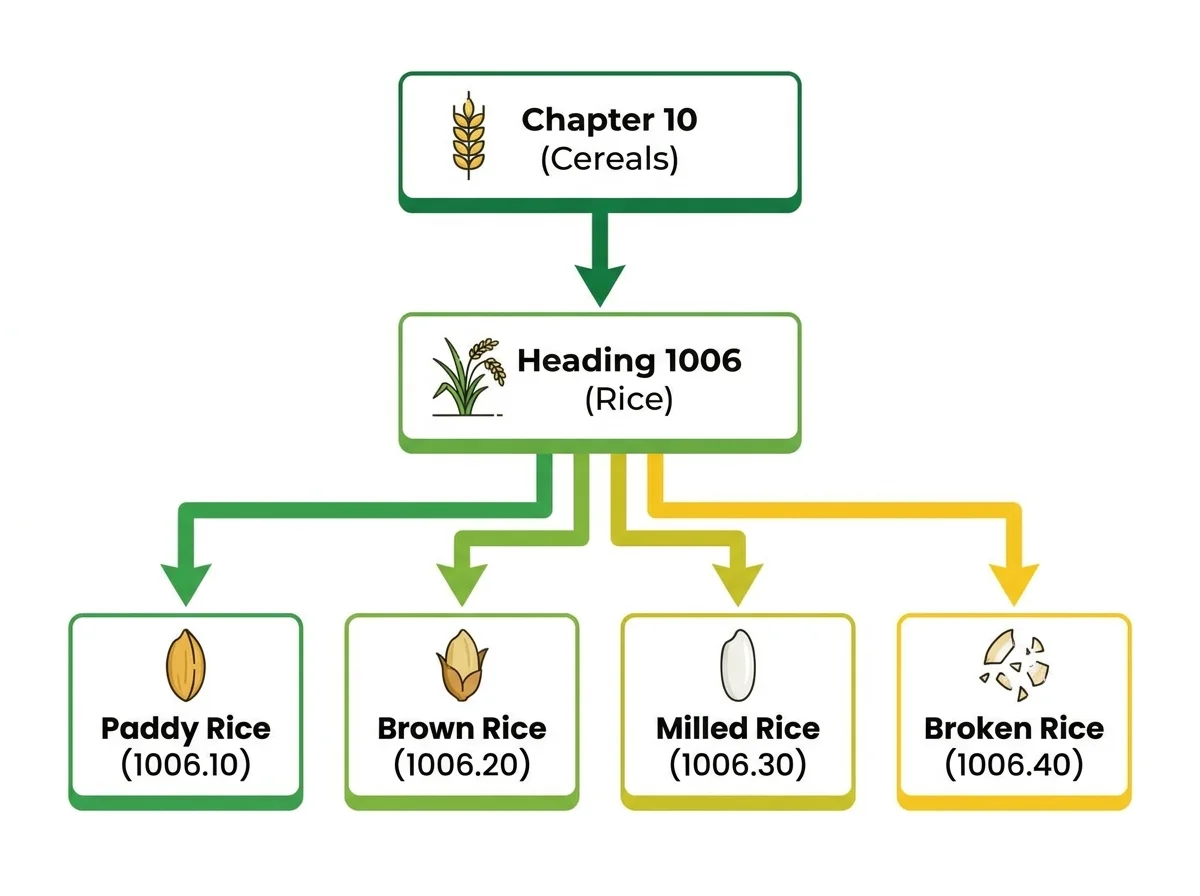
All rice classifications fall under Chapter 10 (Cereals), heading 1006, which covers rice in all its forms. The subheadings beneath it depend on how far the rice has been processed.
The 1006 Subheadings Explained
1006.10: Rice in the Husk (Paddy or Rough Rice)
This covers rice that has not been processed beyond harvesting, with the grain still inside its outer husk. Paddy is rarely traded across borders in this form because it has to be milled before consumption. Seed-grade paddy may fall under more specific national subheadings.
1006.20: Husked (Brown) Rice
Once the outer husk is removed but the bran layer stays on, the rice is classified as husked or brown rice. Brown basmati and brown non-basmati both belong here. The category has become more relevant as health-conscious retail markets ask for whole-grain options.
1006.30: Semi-Milled or Wholly Milled Rice
This is the most commercially important subheading in international rice trade. It covers rice that has been milled to remove the bran layer, whether polished, glazed or further processed. That includes:
• White basmati rice, both raw and steam.
• Parboiled (sella) basmati. Although it is processed before milling, it is still classified here because parboiling modifies the grain structure without cooking it.
• Golden sella basmati.
• IRRI-6, IRRI-9, PK-386 and other milled non-basmati varieties.
Within 1006.30, many countries add national subheadings at the 8-digit level to separate parboiled from non-parboiled rice, and basmati from non-basmati. The UK tariff, for example, singles out parboiled basmati. This matters because basmati imported into the EU and UK benefits from a preferential import tariff when it is accompanied by a certificate of authenticity.
1006.40: Broken Rice
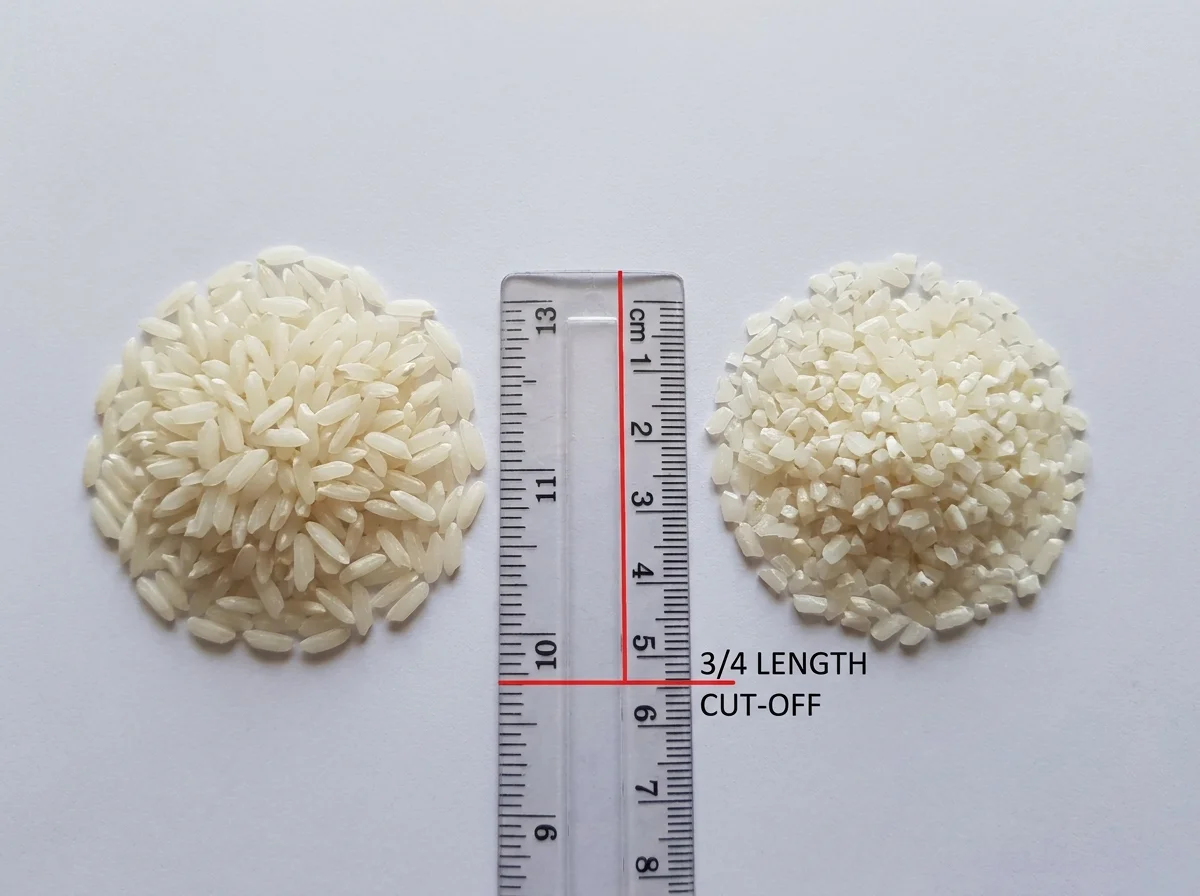
Broken rice, meaning grain fragments no longer than three-quarters of the average length of a whole grain, is classified separately under 1006.40. This applies whatever the variety or processing method, and whether the rice comes from basmati or non-basmati milling. Broken rice is commonly used in food manufacturing, brewing and animal feed. UK Government tariff guidance stresses this separation from whole milled rice because the duty rates differ.
Common Mistakes in Rice Classification
• Parboiled rice declared as non-parboiled: Parboiled (sella) rice must be declared under its own parboiled subheading. Declaring it as regular milled rice can lead to reclassification and duty adjustments.
• Basmati declared as generic milled rice: Where basmati attracts a preferential duty rate, as in the EU and UK, declaring it as generic milled rice means the importer loses the lower rate. The reverse, declaring non-basmati as basmati to claim the preferential rate, is fraudulent.
• Broken rice declared as whole milled: Broken rice carries different duty rates in many countries. Shipments with broken content above the threshold for 1006.30 should be declared under 1006.40.
• Processed rice products treated as raw rice: Pre-cooked or processed products such as rice cakes, puffed rice and cooked frozen rice fall outside Chapter 10 and are classified under Chapter 19 (heading 1904), not the 1006 codes.
Country-Specific Considerations
The six-digit subheadings are consistent worldwide, but national schedules extend to eight or ten digits and can apply different duty rates and import conditions. Confirm the applicable national tariff code and duty rate for your destination and product type with a licensed customs broker or freight forwarder before shipment. ITC Trade Map and the WCO's official resources are useful references for current tariff information.
Saremco Impex provides export documentation, including commercial invoices and packing lists with the correct HS code references, for all rice varieties it supplies. Documentation and sourcing enquiries can be sent through saremcoimpex.com.