
Private Label Rice Packaging: A Guide for Distributors
Private label rice is one of the more accessible commodity categories for a distributor building its own brand. The product is well understood, supply chains are established, and demand for rice is steady in almost every market. Making it work commercially takes more than printing a logo on a bag, though. This guide covers what distributors should consider, from supplier selection and packaging to minimum order quantities.
What Private Label Rice Involves
In rice, private label means buying a product from a supplier, typically a mill or an export trading company, and selling it under your own brand name and packaging design. The supplier handles procurement, milling, quality control and export. You handle branding, distribution and retail relationships.
The commercial case for the distributor is simple. Selling under your own label gives better control over margins, builds brand recognition with your customers and reduces dependence on third-party brand pricing. For the supplier it is a volume business that fills capacity and builds long-term distribution partnerships.
Choosing the Right Variety for Your Market
Settle exactly what you are selling before you design any packaging. Rice is a broad category, and the wrong product for your market becomes a slow-moving SKU however good the pack looks. The main decisions are:
• Variety: 1121 basmati for long-grain premium positioning; Super Kernel basmati for an aroma-led premium; sella (parboiled) for institutional or Middle Eastern foodservice; IRRI-6 or PK-386 for price-competitive non-basmati segments.
• Processing type: White steam for retail home-cooking markets; sella or golden sella for catering, foodservice and many Middle Eastern and African retail markets.
• Pack size: Retail formats typically run 1 kg, 2 kg, 5 kg and 10 kg, while foodservice and institutional buyers use 25 kg and 50 kg. Decide your primary channel first.
Packaging Material Options
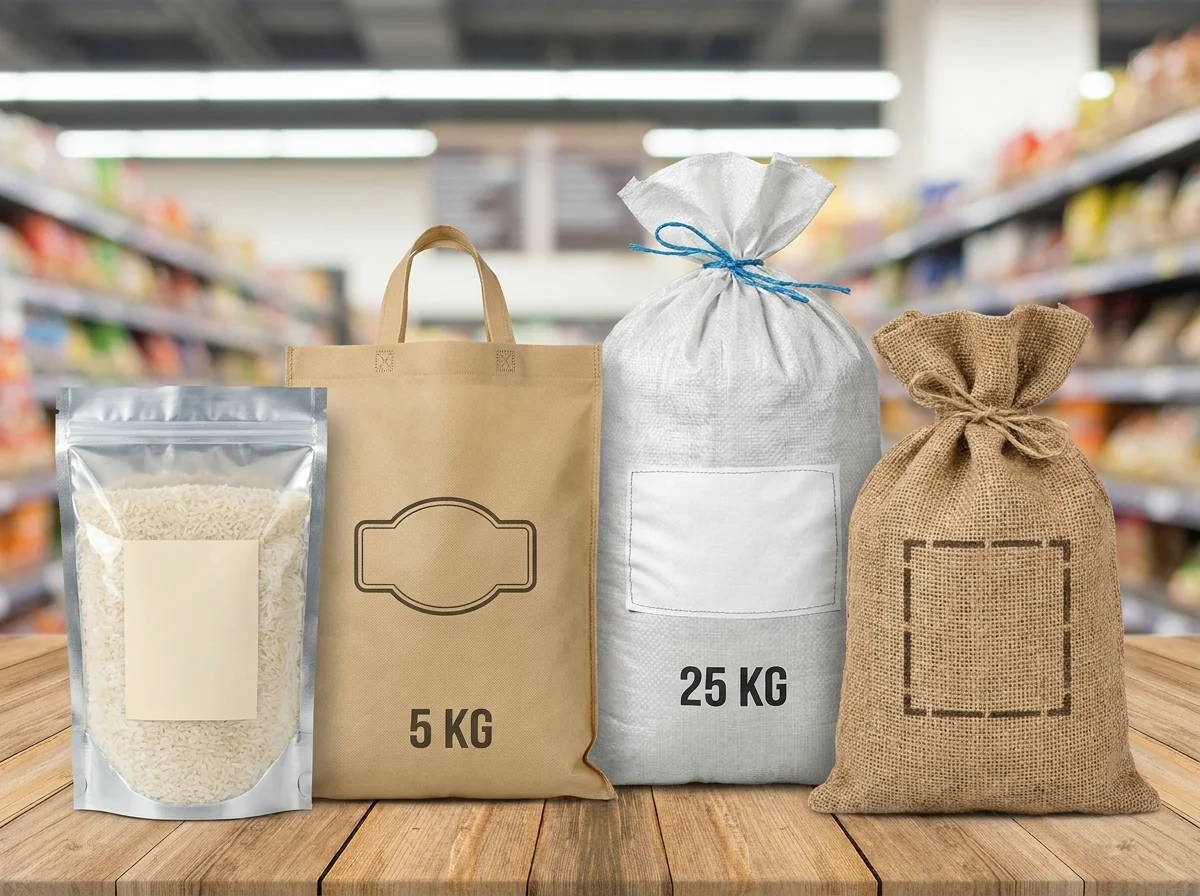
Most private label suppliers offer four bag types:
• PP (polypropylene) woven bags: The standard export format for 25 kg and 50 kg. Durable, cost-effective and widely used for bulk distribution and foodservice.
• Non-woven bags: A softer look, commonly used for 5 kg and 10 kg retail packs, with good print quality for branding.
• BOPP (biaxially oriented polypropylene) bags: Premium print quality with a glossy finish, and the usual choice for retail-facing private label in 1 kg to 5 kg formats. They give excellent shelf presence.
• Jute bags: An eco-friendly option, typically for specialist or premium retail, at a higher cost per unit.
For retail private label, BOPP is the most common choice because the print quality makes branded packs look noticeably more premium. For bulk and foodservice supply, PP woven bags remain standard.
Design and Branding Requirements
Most rice exporters can work from your artwork and print your brand name, logo, product description, nutritional information and barcode directly on the bag. You will normally need to supply print-ready artwork in CMYK at the required dimensions. Plan for the following:
• Bag lead time. The manufacturer needs to produce the custom-printed bags before the rice is packed, typically 3 to 4 weeks for initial production runs.
• Label compliance for your destination market: ingredient declarations, country of origin, net weight, shelf life and any required certifications such as halal or organic where applicable.
• Barcode registration if you supply retail chains that require EAN or UPC codes.
Minimum Order Quantities
MOQs for private label rice from Pakistani exporters vary by supplier. As a general guide:
• 25 kg or 50 kg bulk bags with custom printing usually mean one full container load (FCL), around 25 metric tonnes in a 20-foot container.
• Retail packs (1 kg to 10 kg BOPP bags) generally have higher MOQs in unit terms, though these can often be negotiated per container. Some suppliers will combine two or three SKUs in one container if volumes are split across pack sizes.
In practice, one container per order is the minimum for most private label programmes sourced from Pakistan. Some trading companies will accept smaller first orders as part of a trial arrangement.
What to Confirm with Your Supplier
Before placing a private label order, get these points confirmed in writing:
• The exact product specification: variety, processing type, grain length, moisture, broken percentage and sortex cleaning.
• Packaging material and dimensions.
• Print specification and the artwork approval process.
• Lead time from order confirmation to shipment.
• Which certifications and inspection reports are included as standard and which are available on request.
• Shelf life and best-before date labelling.
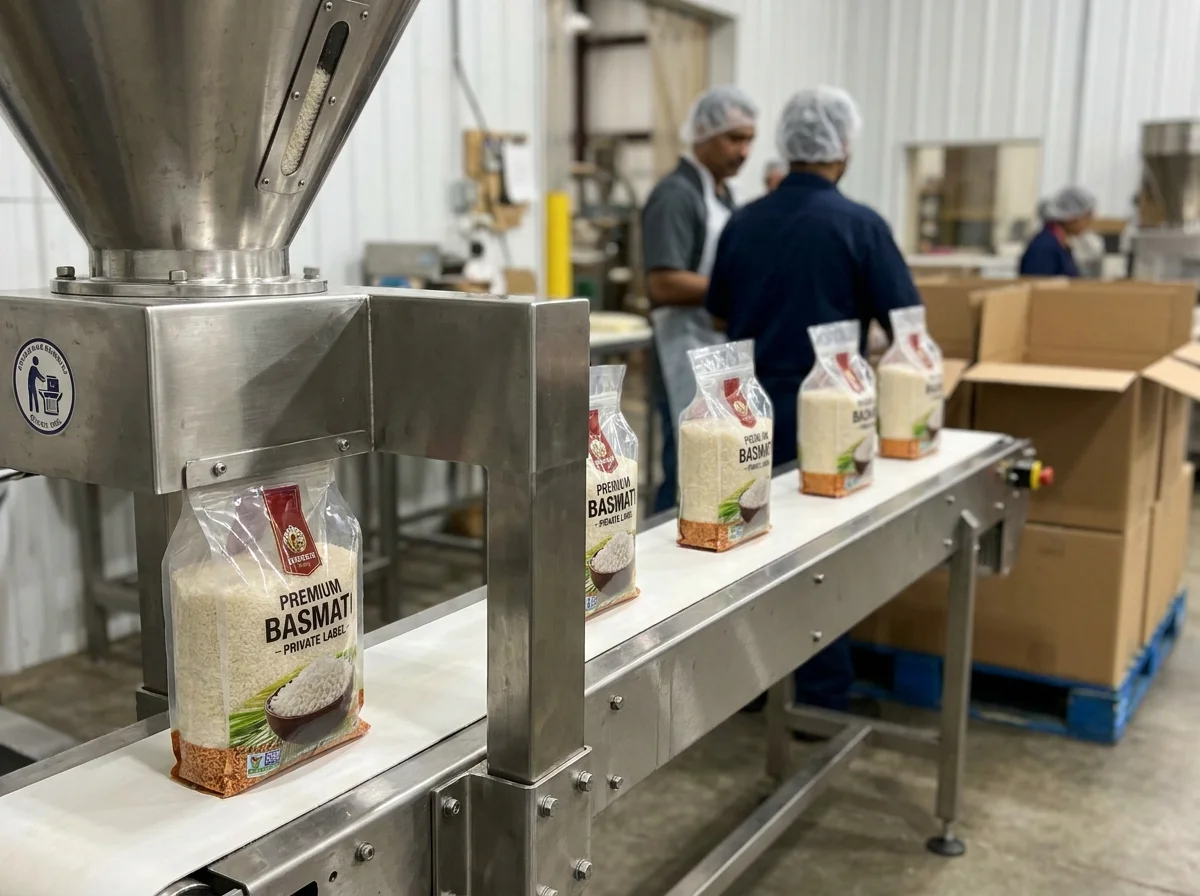
Saremco Impex offers private label packaging for distributors and retail buyers across 1121 basmati, Super Kernel basmati and non-basmati varieties, in a range of pack sizes and bag types. To discuss your requirements, visit saremcoimpex.com.