
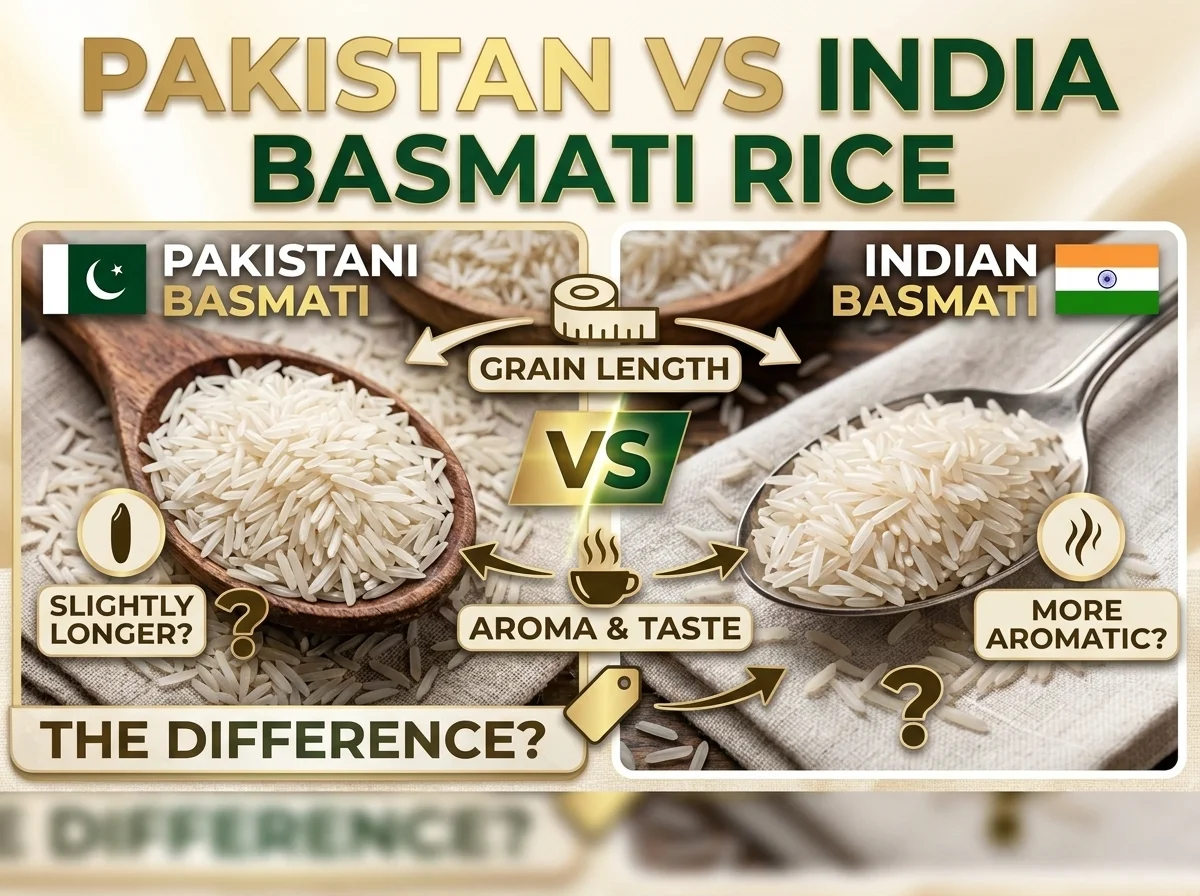
Pakistan vs India Basmati Rice: What Is the Difference?
Pakistan and India are the only two countries that produce genuine basmati rice. Between them they supply virtually all the basmati traded internationally, to the Gulf, Europe, North America and beyond. For buyers, the differences between Pakistani and Indian basmati have practical consequences for variety selection, quality expectations, pricing and, in some markets, regulatory requirements.
Geography and Growing Conditions
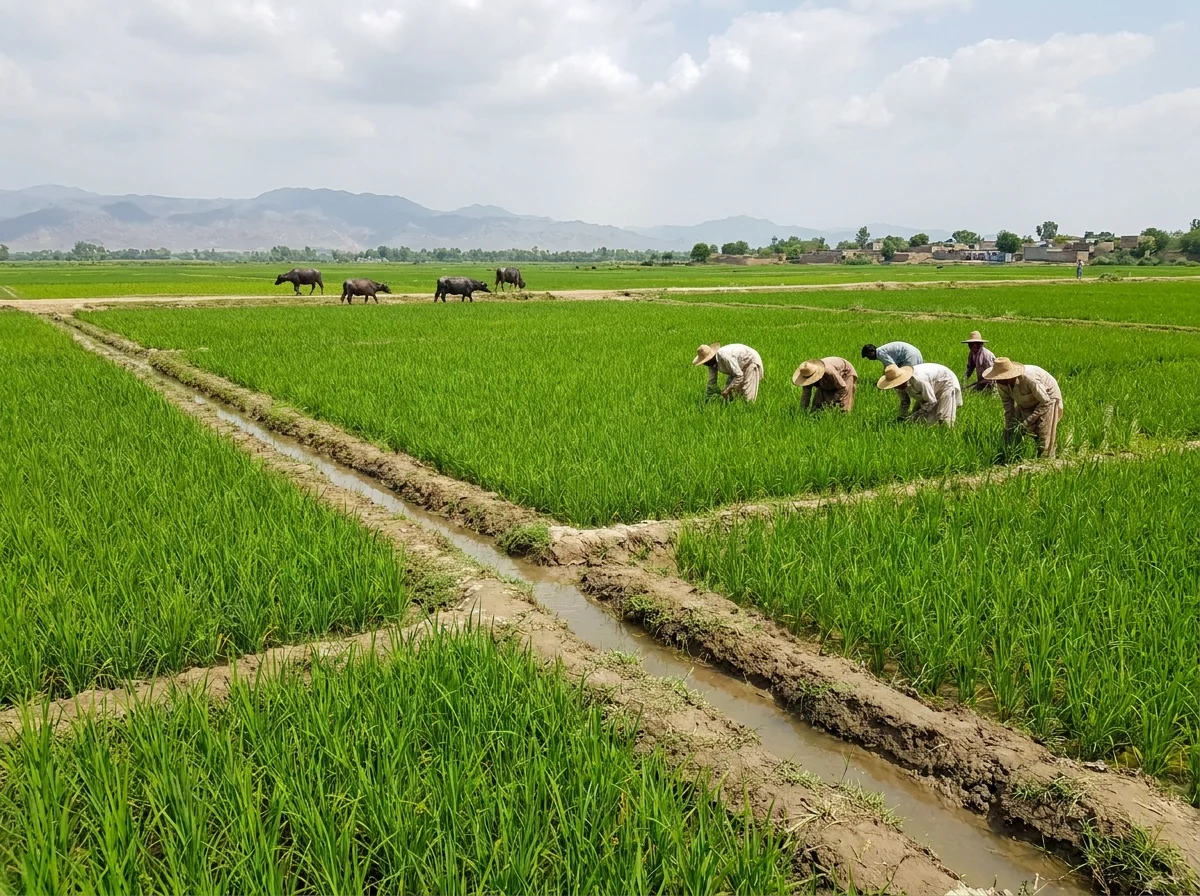
Authentic basmati grows in a specific agro-climatic zone of the Indo-Gangetic plains, fed by snow-melt rivers from the Himalayas. In Pakistan the main growing belt runs through Punjab, particularly the districts of Gujranwala, Hafizabad, Sheikhupura, Sialkot, Narowal and Nankana Sahib. According to the Food and Agriculture Organization (FAO), Pakistan's traditional basmati area lies in the Kalar bowl between the Ravi and Chenab rivers, a region shaped by alluvial soil and particular temperature and humidity conditions.
India's designated basmati zones cover Punjab, Haryana, parts of Uttar Pradesh, Uttarakhand, Himachal Pradesh and parts of Jammu and Kashmir. Each region yields rice with somewhat different characteristics, so Indian basmati is no more a single uniform product than Pakistani basmati is.
Varieties: Different Strengths
Each country has developed its own leading export varieties.
• Pakistan: Super Kernel basmati, known for its pronounced, traditional aroma, and 1121 basmati, locally called Kainat, known for exceptional grain length and high yield per acre. Both are widely available in white, steam, sella and golden sella forms.
• India: Pusa Basmati 1121 (the original variety, developed at IARI and now also grown in Pakistan), Pusa Basmati 1509 (a shorter grain but cost-effective), and Traditional Basmati 370 (an older heritage variety with intense aroma). India also produces significant volumes of 1509, which is rarely grown in Pakistan at comparable scale.
The 1121 grown in both countries is genetically the same cultivar. Soil, water source and post-harvest handling still create subtle differences in the finished rice, and experienced buyers, particularly in the EU and the Gulf, can sometimes detect them.
Aroma and Flavour
Aroma is the most subjective and most debated difference. Industry opinion holds that Pakistani Super Kernel has a slightly deeper, earthier fragrance, while some Indian varieties, especially traditional types from Haryana and Punjab, have a distinct popcorn-like or floral quality. Blind tastings rarely produce consistent preferences, and the gap narrows further with aged rice from either origin.
For buyers, the more useful point is that aroma depends more on variety and ageing than on country of origin. A well-aged Pakistani Super Kernel will probably beat a poorly stored Indian Pusa 1509 on fragrance, and the reverse is equally true.
Export Volumes and Market Share
India is far larger by volume. Data from the Rice Exporters Association of Pakistan (REAP) and industry reports put Indian basmati exports at roughly 5 to 6 million tonnes a year, against approximately 700,000 to 900,000 tonnes from Pakistan. India therefore holds the larger share of global basmati trade, while Pakistan's strength lies in the premium segment.
Pakistani basmati has nevertheless often sold at or above Indian prices per tonne in several markets. In the EU and UK, Pakistan held approximately 67% of the basmati brown rice market as of early 2025, even after India returned to full export capacity. That position reflects a perception among European buyers of consistent quality and fewer pesticide residue concerns.
Regulatory Differences for Importers
For most markets both origins face similar documentary requirements: a phytosanitary certificate, certificate of origin and commercial invoice. A few differences are worth knowing.
• EU border controls: Both countries are subject to enhanced controls under Regulation 2019/1793, but testing frequencies and the pesticides flagged have historically varied between them.
• EU tariff preference: The basmati preferential tariff requires a certificate of authenticity, issued by the Trading Corporation of Pakistan for Pakistani rice and by India's Export Inspection Council for Indian rice.
• United States: In 2025 and 2026, differing tariff rates on Indian and Pakistani imports have shifted trade dynamics, favouring one origin over the other depending on the period. Confirm current rates before finalising sourcing decisions for the US.
Which Origin Should You Source From?
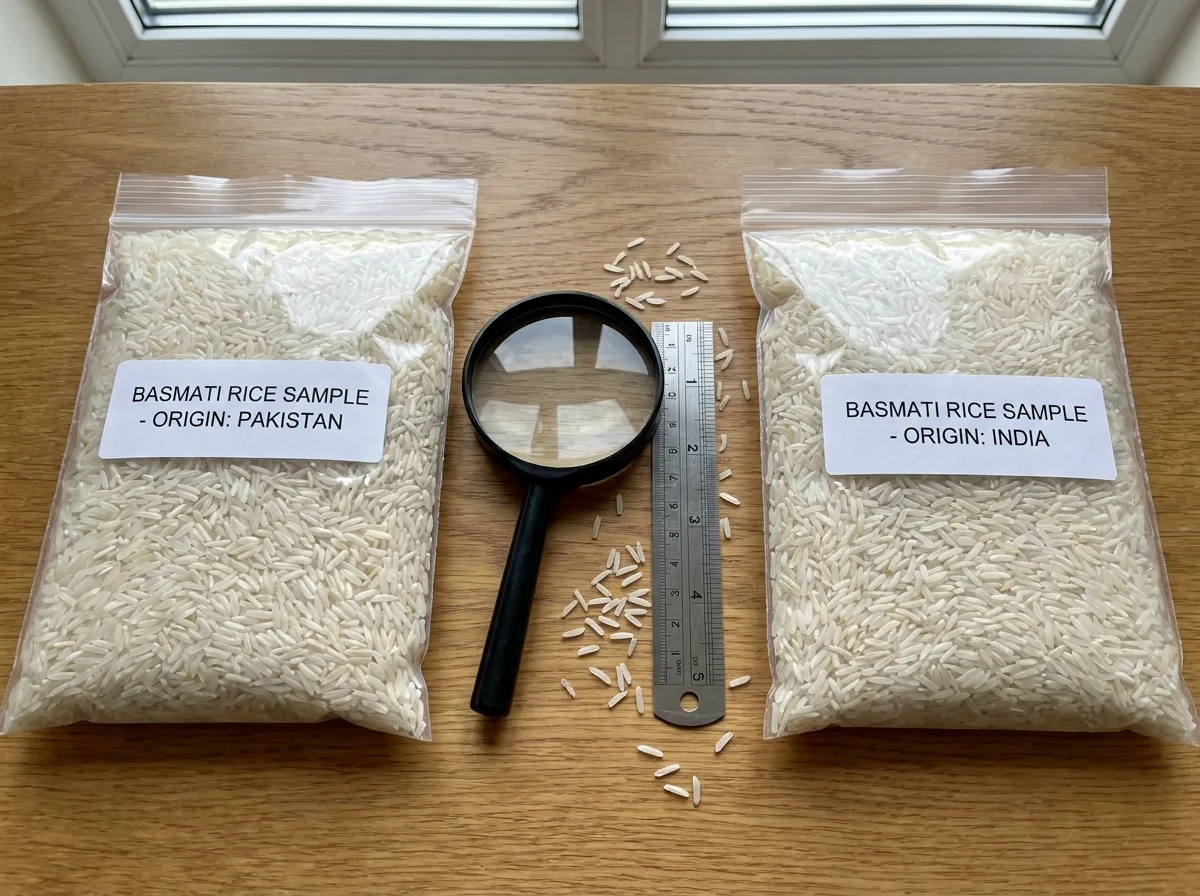
For most buyers the decision rests on three things: the variety required, the price point, and the regulatory and consumer preferences of the destination market. Both origins produce high-quality basmati when bought from reputable exporters. The differences are real but often overstated, and origin usually matters less than variety, grade, ageing and supplier reliability.
Saremco Impex specialises in Pakistani basmati, Super Kernel and 1121, exported from Punjab's main growing districts. Specifications and sourcing enquiries are welcome at saremcoimpex.com.