
How Himalayan Salt Is Mined and Processed in Pakistan
The pink salt found on gourmet shelves and in wellness stores around the world traces back almost entirely to one place: the Salt Range of Punjab, Pakistan, and most commonly the Khewra Salt Mine. Knowing how the salt travels from underground rock to a packaged product helps explain both its price and its appeal.
Where Himalayan Salt Comes From
The Khewra Salt Mine is located in the Jhelum District of Punjab, near the town of Pind Dadan Khan. It is the world’s second-largest salt mine and Pakistan’s largest.
The deposit formed from an ancient evaporated seabed that was compressed over millions of years. The Pakistan Mineral Development Corporation estimates that it holds tens of millions of tons of reserves. Mining in its current form dates back to 1872 under British-era engineering, although the deposit itself has been worked in some form for far longer.
How the Salt Is Extracted
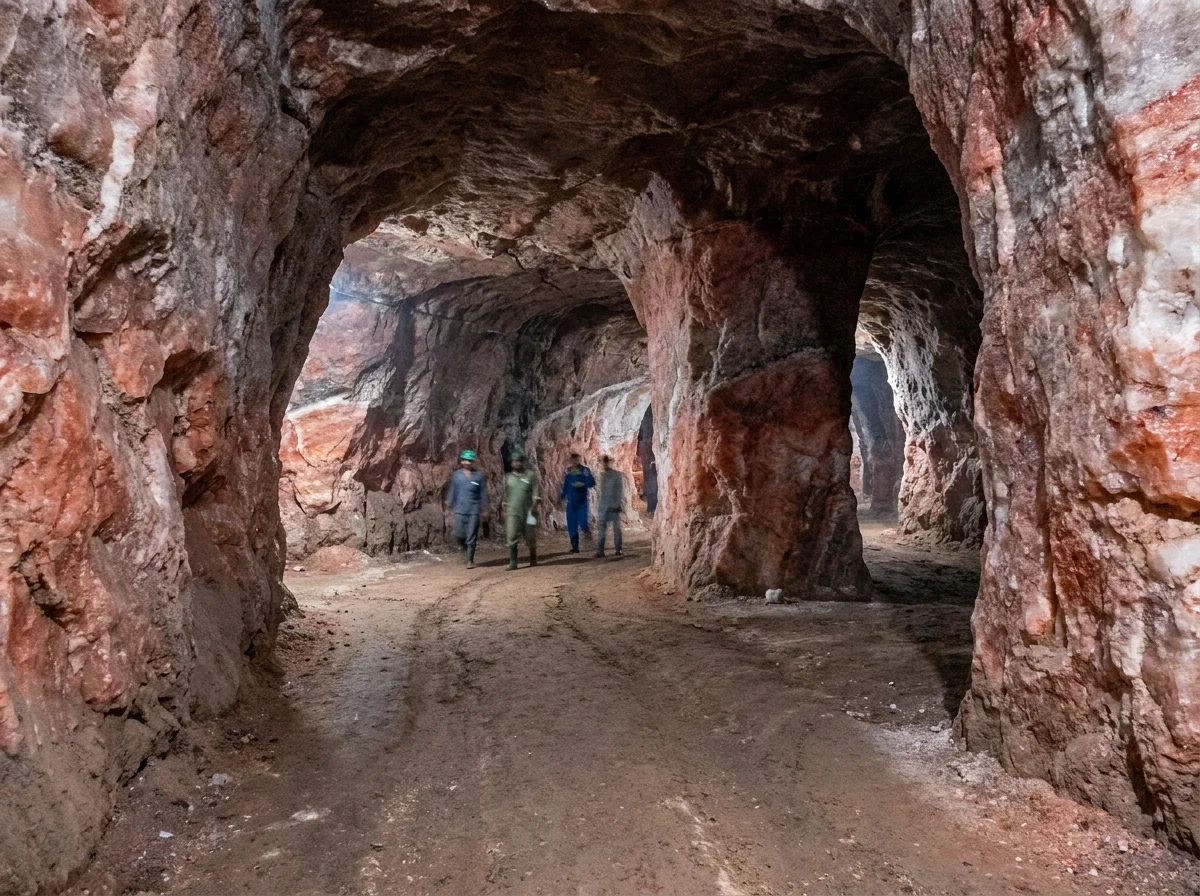
Khewra uses the room-and-pillar method. Miners excavate horizontal tunnels and chambers while leaving large pillars of unmined salt in place to support the roof. This allows extensive underground extraction while keeping the structure stable.
Some chambers at Khewra are large enough to hold structures such as a small mosque built entirely from salt blocks. The mine has become a significant tourist attraction in its own right, alongside its role as a working industrial site.
Rock salt is blasted or mechanically cut from the seams, transported out of the mine, and then broken down in size before further processing.
From Raw Rock Salt to Retail-Ready Product
Once extracted, the rock salt goes through several steps before it is ready for sale:
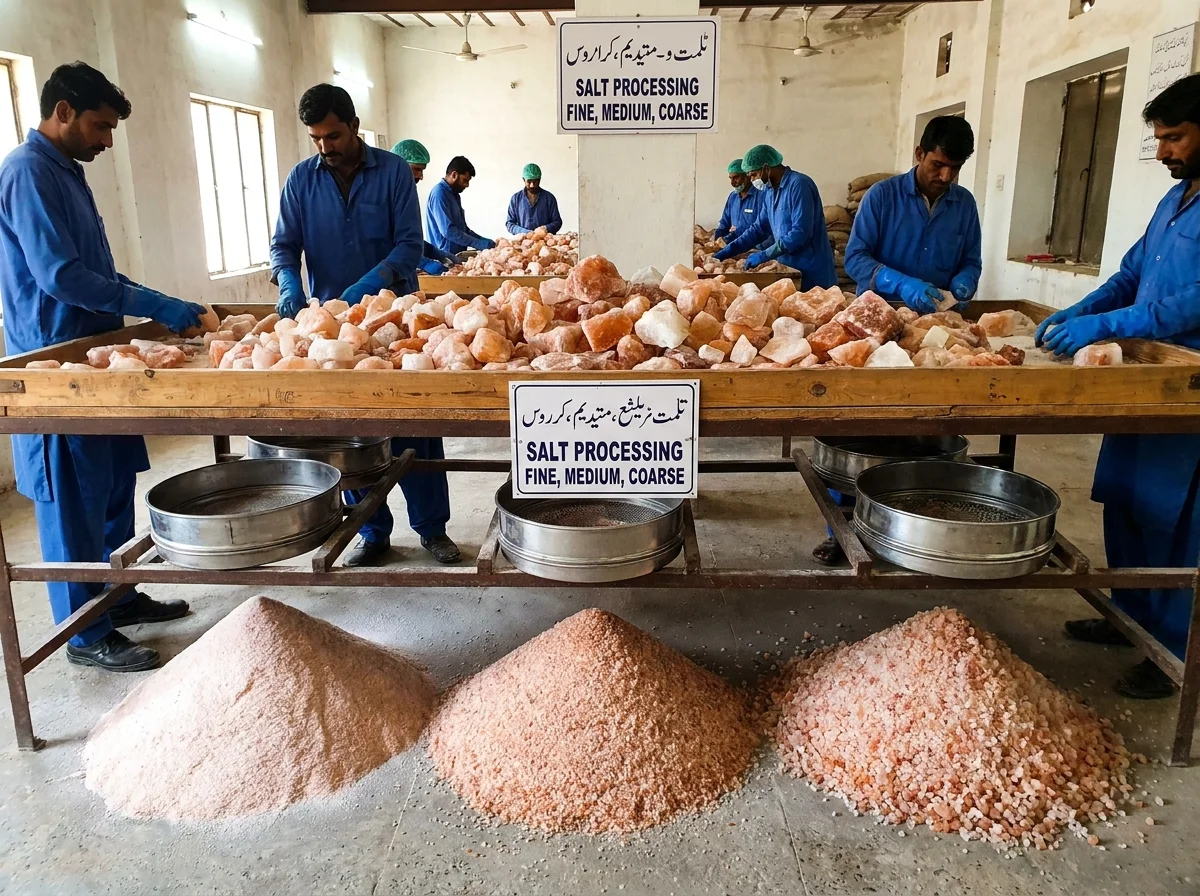
• Sorting and grading by colour. Khewra salt ranges from white and off-white through pink to deep red, depending on mineral content.
• Crushing and milling. Large rock chunks are reduced to the target grain size, whether that is fine table-salt-like grains, coarse cooking crystals, or larger pieces for lamps and blocks.
• Sieving. Output is separated into consistent grain-size categories for different end uses.
• Washing or further refining. For food-grade product, this removes dust and fine particulate before packaging.
• Quality checks. These cover purity and, for food-grade product, compliance with relevant food safety standards.
Why Grain Size and Colour Grade Matter to Buyers
Buyers sourcing Himalayan salt should specify both grain size and colour grade clearly, because each directly affects end use and price. Fine and medium grain, lighter-coloured salt typically goes to food and culinary markets. Larger chunks and deeper pink or red material are often used for lamps, decorative blocks and spa products, where the visual character of the piece matters as much as the salt itself.
Saremco Impex sources Himalayan pink salt directly from Pakistan’s Salt Range and can supply a range of grain sizes and colour grades to match culinary, spa or decorative product specifications. To discuss your requirements, you can contact the team through the website.