
From Agricultural Residues to Export Products: Pakistan's Biomass Supply Chain
The path from a farmer's field to a container ship carrying processed biomass has more steps than buyers often realise. Knowing where the residue comes from, how it is collected and how it becomes an exportable product helps explain both the pricing and the reliability of what ends up in a purchase order.
Stage 1: Residue Generation at the Farm or Mill
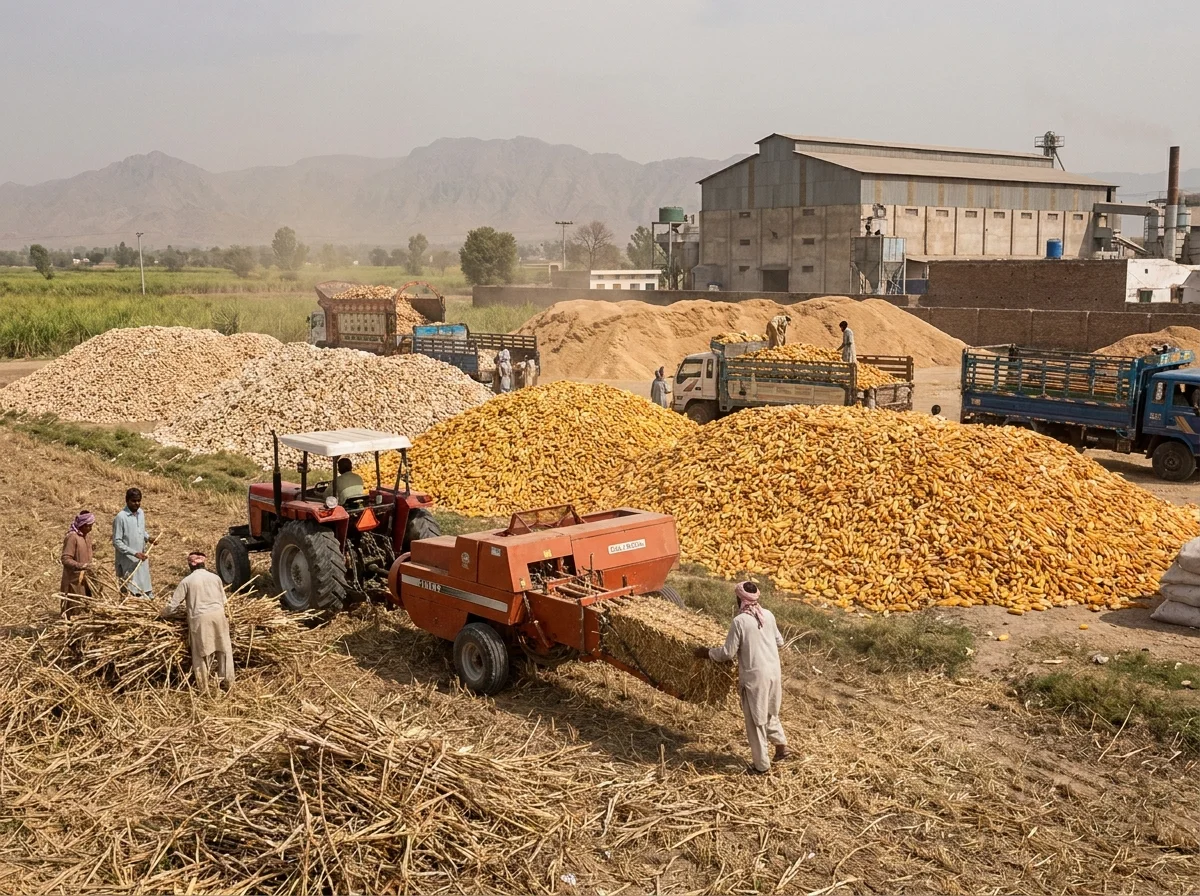
Agricultural residue in Pakistan comes from two main points. Field residue is what is left after harvest, such as cane trash, cotton sticks and some corn stover. Processing residue is generated at mills: corn cob from maize shelling, bagasse from sugar milling and rice husk from paddy milling. Processing-stage residue is usually easier to collect consistently, since it is already concentrated at a single facility instead of scattered across fields.
Stage 2: Collection and Aggregation
Collection is historically the weakest link in the chain. Research into crop residue burning in Pakistan identifies the lack of accessible, affordable collection options as a major reason farmers keep burning residue instead of selling it. Farm size and the tight turnaround between harvest and the next planting season also influence whether residue is collected, partially burned or fully burned.
Processing-stage residue avoids this problem because it is aggregated at the mill. That is part of why corn cob, bagasse and rice husk are generally more export-ready today than field-collected residues such as cane trash or cotton sticks.
Stage 3: Processing
Once collected, residue goes through drying, grinding or crushing, and grading, depending on the target product. This is where generic agricultural residue becomes a specification-grade export product, with moisture brought down to a stable level, particle size screened to a defined range and foreign matter removed.
Stage 4: Densification for Pellets, Briquettes and Bio-Coal
Some biomass products stop at the crushed or ground stage. Others are compressed into pellets or briquettes, or torrefied into bio-coal. Densification adds value and improves handling, at the cost of extra processing investment.
Stage 5: Quality Verification and Documentation
Export-ready suppliers test and document key specifications, including moisture, ash content and, where relevant, calorific value. They also prepare the certificates buyers need for customs clearance and quality assurance at the destination.
Stage 6: Export Logistics
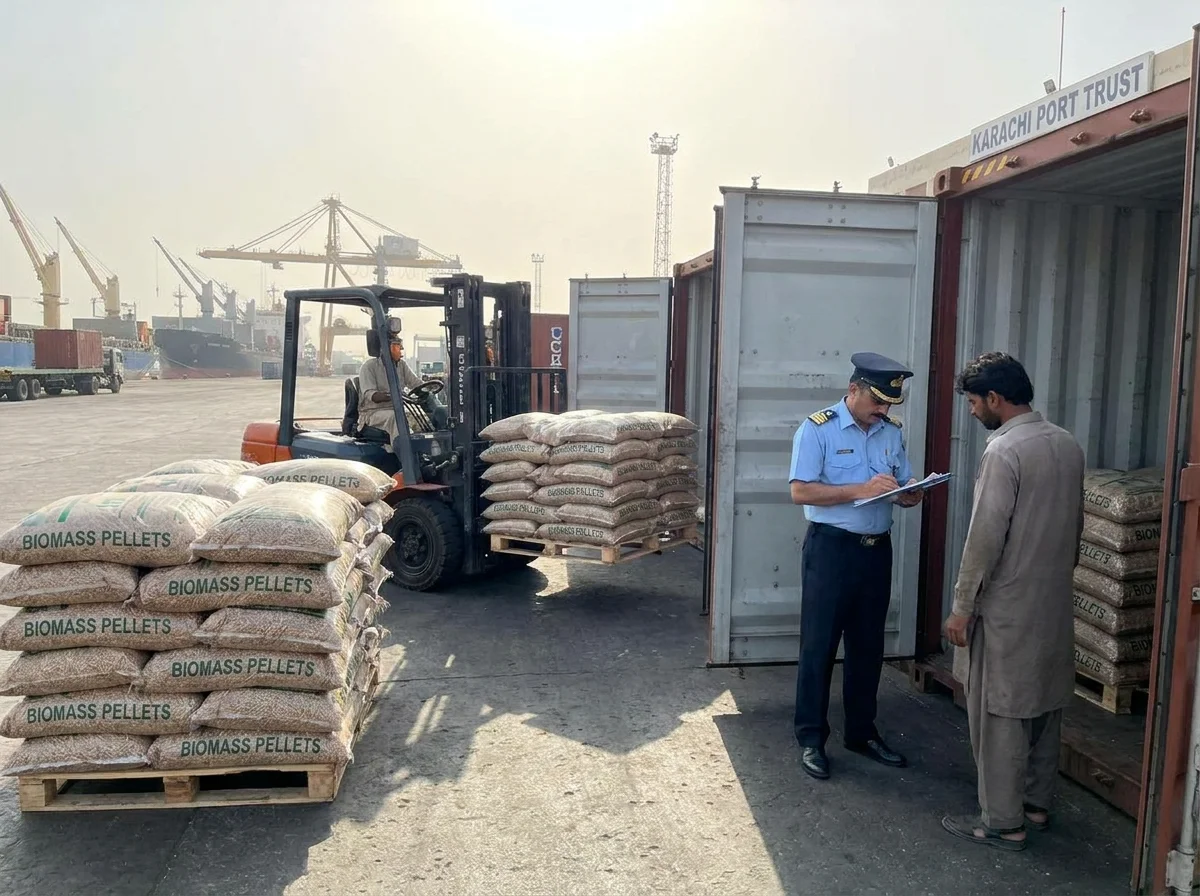
The product then moves to port, predominantly Karachi for Pakistan's bulk and containerised agricultural exports. It travels with the commercial paperwork needed to clear customs at both ends: the invoice, packing list, certificate of origin and, where relevant, phytosanitary certification.
Where the Chain Can Break Down
The weak points follow directly from the stages above. Collection is the most fragile, particularly for field residues, where farm size and short gaps between harvest and planting push farmers toward burning. Buyers who ask for field-collected material such as cane trash or cotton sticks should expect less consistent availability than for corn cob, bagasse or rice husk. Weaknesses can also appear at the processing and verification stages, where a supplier without proper drying, grading or testing cannot turn raw residue into a dependable specification-grade product.
Working with a Partner Who Understands the Chain
Daa Agri Limited works across this supply chain, from processor relationships through to export documentation, helping international buyers source residue-based products from Pakistan without managing each stage on their own.