
Extra Long Grain Rice: What Makes It Premium?
Walk down the rice aisle of almost any supermarket and "extra long grain" shows up on the premium packs. The same term appears in export price discussions, supplier specifications and import tenders. What does it actually mean, and why does grain length make such a visible difference to price and market position? This article explains the classification, the reasons behind the premium, and what buyers should check when sourcing.
How Extra Long Grain Rice Is Defined
Rice is classified by grain length under international standards. The Codex Alimentarius Commission, which sets international food standards, broadly groups milled rice as short, medium, long or extra long, based on the length-to-width ratio and absolute length. In practical trade terms:
• Long grain rice: Average grain length of roughly 6.0 to 7.0 mm, with a slender profile.
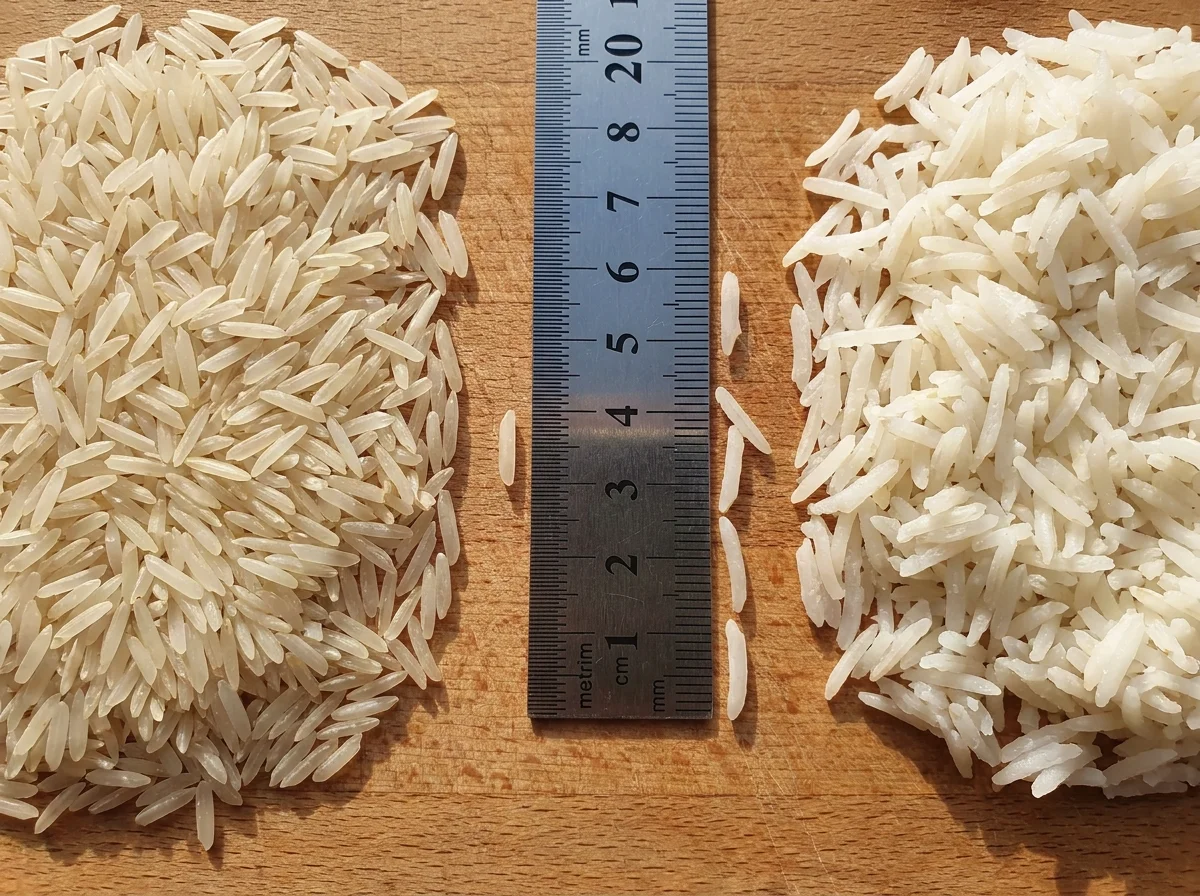
• Extra long grain rice: Average grain length above roughly 7.0 mm in the raw state, with a pronounced, needle-like slender profile.
Within basmati, the extra long designation applies to premium varieties whose raw grain typically exceeds 7.5 mm. For 1121 basmati it reaches 8.3 to 8.5 mm. Once cooked, these varieties can elongate dramatically, sometimes to 20 to 22 mm, which is two to two-and-a-half times the raw length.
Why Grain Length Commands a Price Premium
Longer grains are harder to grow, break more easily in milling and are harder to keep consistent from lot to lot. Together these factors push prices up along the supply chain.
• Agronomic difficulty: Extra long varieties such as 1121 basmati and Super Kernel need specific soil, water and climate conditions, found mainly on the Punjab plains of Pakistan and India. Yield per acre for the longest-grain varieties is generally lower than for shorter-grain alternatives.
• Milling losses: Longer grains are more fragile during milling and break at higher rates. Delivering a low-broken product takes careful processing and premium sortex cleaning, and both add cost.
• Visual and culinary appeal: Long, separate grains look better on the plate. Where rice is the centrepiece of a dish, as in biryani, pilaf or mandi, grain appearance directly shapes perceived quality, and restaurants and caterers pay more for rice that looks as good as it tastes.
Extra Long Grain Rice in Pakistani Exports
Pakistan's premium export varieties are closely tied to extra long grain rice:
• 1121 Basmati (Kainat): The global benchmark for extra long grain. Raw grains average 8.3 to 8.5 mm and cooked length reaches 20 to 22 mm. Available as white, steam, sella and golden sella.
• Super Kernel Basmati: Raw grain averages about 7.5 to 8.0 mm, slightly shorter than 1121, but with a stronger, more traditional basmati aroma. Highly regarded in European and Gulf premium markets.
Both are grown in Punjab's rice belt and go through strict grading and quality checks before export. Grain length is checked against specification at the mill, and export-grade lots must meet minimum length thresholds.
What to Confirm When Sourcing Extra Long Grain Rice
For premium retail or foodservice use, these are the specifications worth confirming:
• Average grain length (AGL): Ask for the figure in mm for the specific batch on offer. A Certificate of Analysis from the mill or a third-party lab should include it.
• Elongation ratio: For basmati, cooked grain length against raw grain length is a key indicator of variety authenticity and premium quality.
• Broken percentage: Extra long grain only earns its premium when the grains are intact. A broken percentage of 5% or more noticeably reduces visual and culinary value, so make sure it is within specification.
• Crop year and ageing: Basmati aged for 12 to 24 months under controlled conditions develops stronger aroma and better cooking performance. For premium applications, specifying aged rice is worth the extra cost.
Market Applications
Extra long grain basmati from Pakistan serves a wide range of buyers: premium retail chains in the UK and EU, specialty South Asian grocery chains in North America and Australia, five-star hotels and restaurants across the Gulf, and high-end private label brands in several regions.
Saremco Impex exports extra long grain 1121 basmati and Super Kernel basmati from Pakistan in white, steam and sella forms. For premium product specifications and bulk sourcing enquiries, visit saremcoimpex.com.