
Chemical Composition and Formula of Rock Phosphate Explained
Technical teams looking at rock phosphate for the first time often ask for "the chemical formula", expecting one clean answer as they would for a pure compound. Rock phosphate is more complicated than that. It is a natural rock made up of several minerals, not a single pure substance.
Apatite: The Core Mineral Group
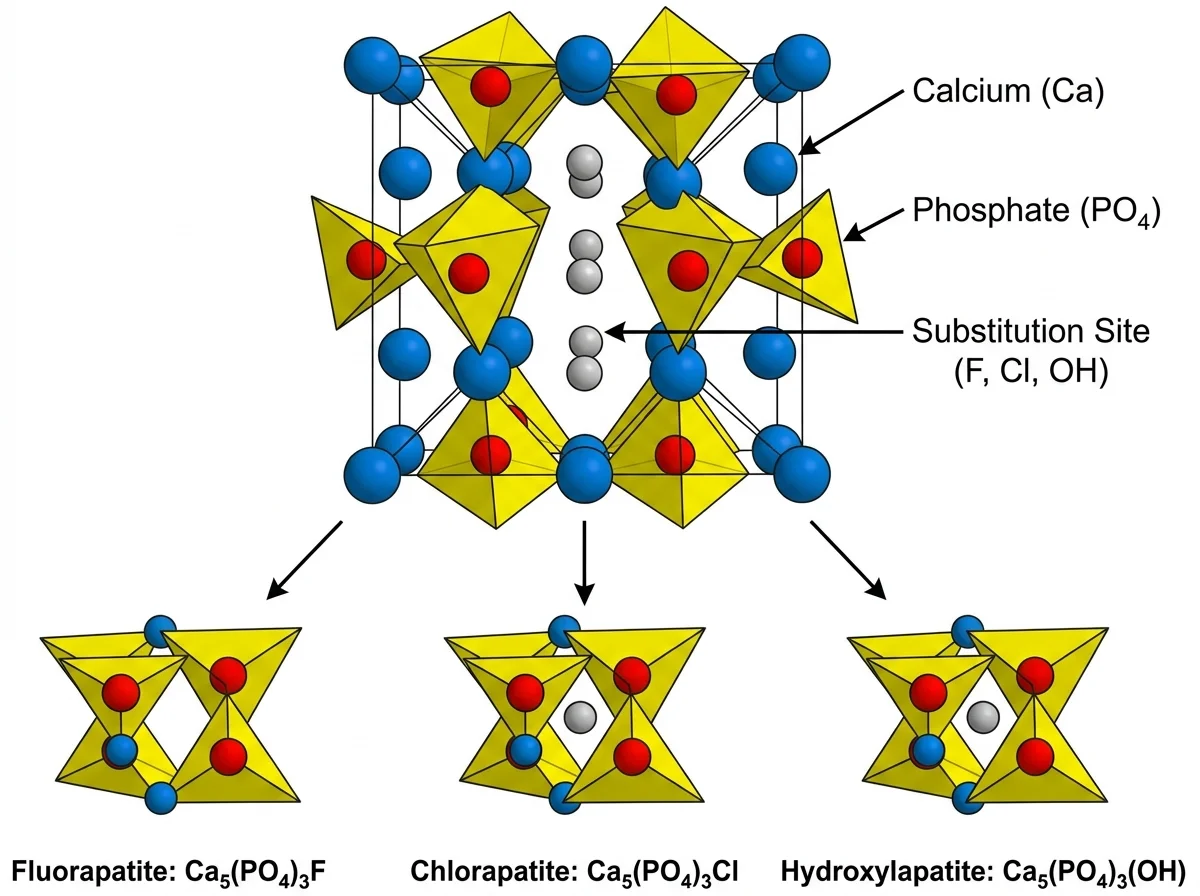
The phosphorus in rock phosphate is carried mainly by minerals of the apatite group. The general formula is Ca5(PO4)3(F,Cl,OH), which means the crystal structure can hold fluorine, chlorine or hydroxyl ions in the same position. That gives three common varieties: fluorapatite (Ca5(PO4)3F), chlorapatite (Ca5(PO4)3Cl) and hydroxylapatite (Ca5(PO4)3OH).
Most economically significant sedimentary phosphate deposits, including those in Pakistan's Hazara region, are dominated by fluorapatite or the closely related carbonate-fluorapatite, often called francolite in geological literature.
Why P2O5 Is the Number That Matters Commercially
The mineral formula describes crystal structure, but the commercial grade of rock phosphate is almost always stated as P2O5 (phosphorus pentoxide) content by weight. This is an industry convention, not a claim that P2O5 exists as a separate compound in the rock. It is simply the standard way of expressing how much phosphorus, by chemical equivalent, the ore contains.
Commercial grades typically run from around 20% P2O5 for lower-grade ore up to 35% or more for high-grade, beneficiated material.
What Else Is in the Rock
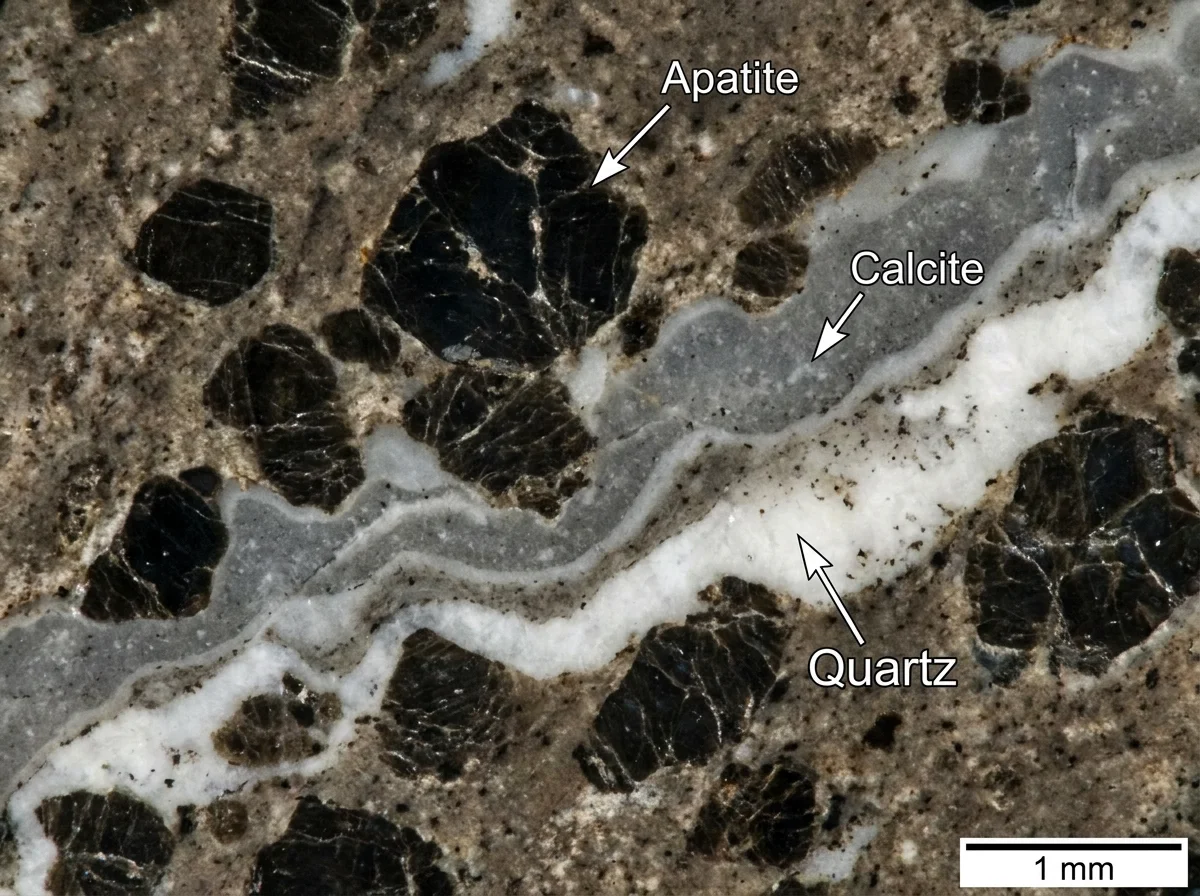
Rock phosphate is never pure apatite. Depending on the deposit, it commonly sits alongside calcite, dolomite, quartz, clay minerals, feldspar and iron-bearing minerals such as hematite. This is why raw samples from the same general area can show meaningfully different compositions. Research on Pakistan's Hazara phosphorite deposits has identified quartz, calcite, dolomite, feldspar, illite and hematite as common accessory minerals alongside the dominant fluorapatite.
These accessory minerals matter commercially. Impurities such as iron and aluminium oxides can interfere with certain fertilizer manufacturing processes, which is one reason beneficiation is often needed before rock phosphate reaches its final grade specification.
Reactivity Differences Between Deposits
Not all fluorapatite behaves the same once it reaches soil or a processing plant. Carbonate substitution within the apatite structure, associated with the term francolite, tends to make the mineral more chemically reactive. That is particularly relevant to producers considering direct soil application rather than acid processing. It also explains why two sources with similar P2O5 percentages can perform differently in the field.
Why This Matters for Buyers
Because rock phosphate is a mineral assemblage and not a single compound, lab analysis is essential before finalising a purchase, and a general product description is not enough. Buyers evaluating rock phosphate for fertilizer manufacturing or direct agricultural use should ask for a full chemical breakdown, not just a P2O5 percentage.
For detailed specification sheets on rock phosphate sourced from Pakistan, buyers can contact suppliers including Daa Minerals Limited through DaaTrade.