
Biomass Pellets Export from Pakistan: Quality Standards, Uses, and What Buyers Should Know
Biomass pellets are the processed form of agricultural or wood residue — compressed into a dense, uniform fuel product that burns more predictably, stores more compactly, and moves through supply chains far more efficiently than raw feedstock. That's exactly why they've become the preferred purchasing format for most international biomass fuel buyers, rather than raw sawdust, rice husk, or straw.
Pakistan has the raw material base to be a genuine pellet supplier, even if it's still building out certified production capacity compared to more established origins. Here's what buyers should know before sourcing.
What Goes Into a Biomass Pellet
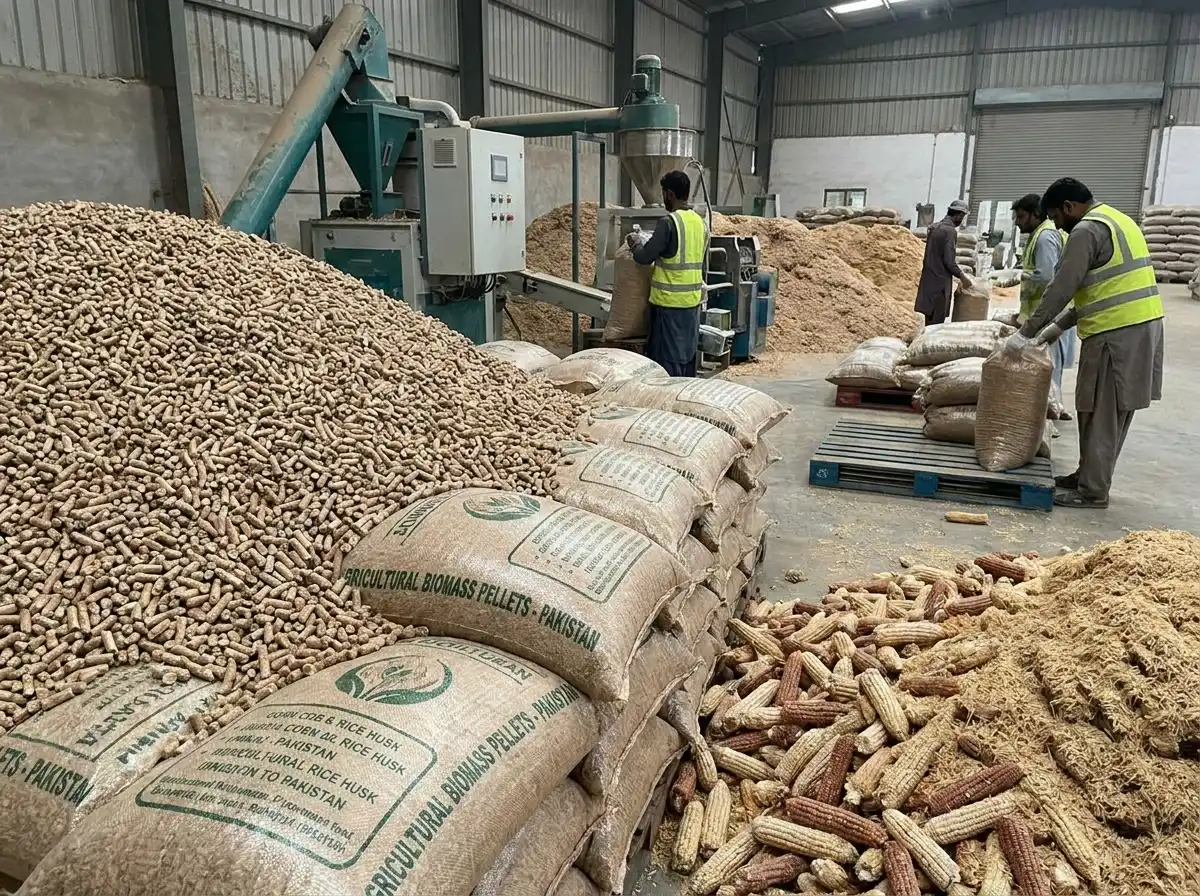
Pellets can be produced from a range of feedstocks — wood sawdust, corn cob, rice husk, sugarcane bagasse, and other crop residues — compressed under heat and pressure. In most cases, no added binders are needed: natural lignin in the raw material acts as a binding agent during the pressing process. The feedstock mix affects the final pellet's calorific value, ash content, and combustion characteristics, which is why buyers should always ask what a pellet is made from before comparing specs.
Quality Standards Buyers Should Know
For buyers targeting European markets, the ENplus certification scheme — based on the ISO 17225 series of standards — is close to a baseline requirement, particularly for residential heating pellets. The scheme defines three grades: A1, A2, and B. A1 covers the lowest-ash, highest-quality pellets; B covers industrial-grade material with looser tolerances. Buyers sourcing for industrial boilers rather than residential heating often accept a lower grade at a more competitive price, so it's worth being clear about the end application before requesting a specific certification level that may not be necessary or cost-effective.
Why Global Demand for Biomass Pellets Keeps Growing
Renewable energy targets across Europe, along with rising interest in biomass heating in parts of Asia, continue to support pellet demand as an alternative to coal and natural gas. The category is broad enough that both wood-based and agricultural-residue-based pellets find buyers — though wood pellets currently dominate the higher-value residential heating segment, while agricultural residue pellets are more common in industrial applications.
Sourcing Considerations for Pakistan-Based Supply
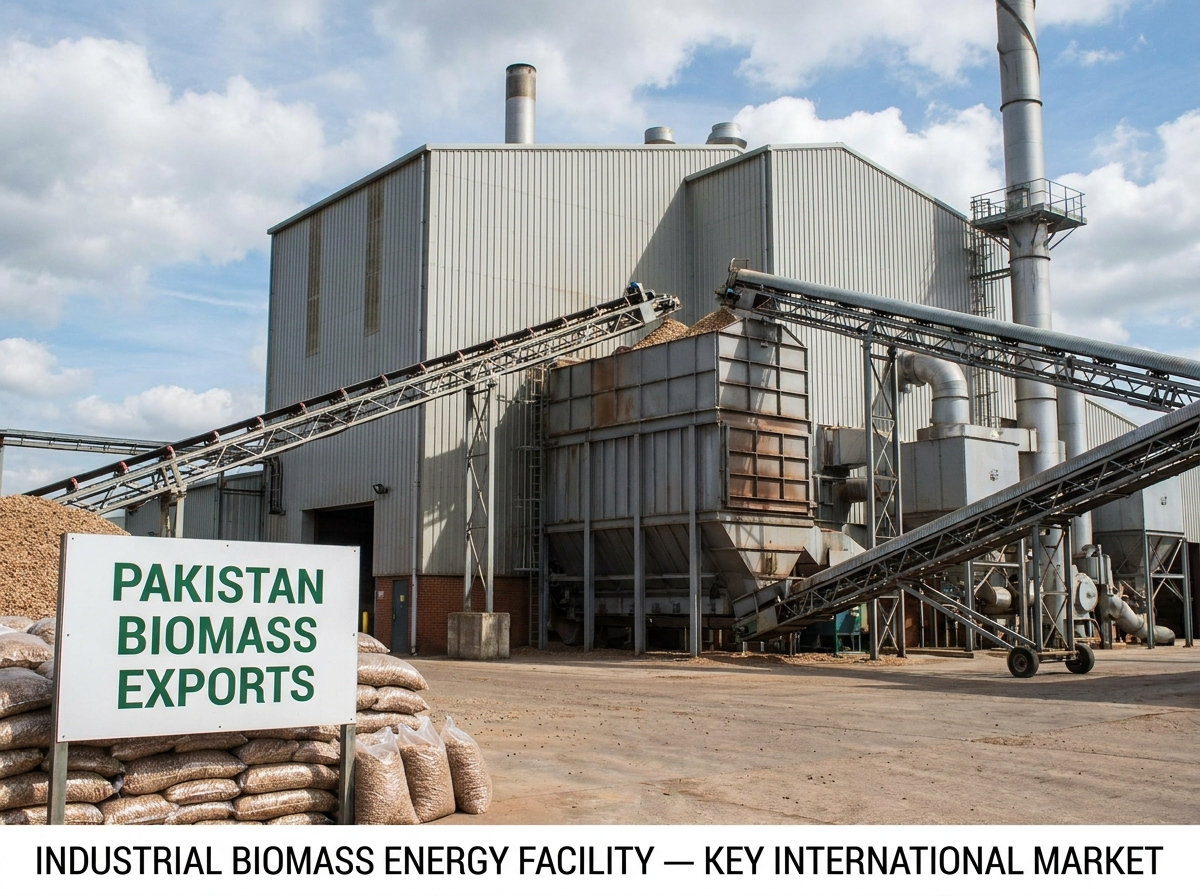
Pakistan's combination of agricultural residue volume and growing wood-processing output gives it real potential as a biomass pellet supplier. The practical considerations for buyers include confirming whether the producer holds or is working toward ENplus or equivalent certification, understanding the feedstock mix used in production, and starting with a trial order to verify consistency before scaling up.
Sourcing Biomass Pellets from Pakistan
Daa Agri Limited works with pellet producers across Pakistan and helps international buyers evaluate specifications, request samples, and understand certification options before committing to larger volumes — whether the intended application is residential heating, industrial boilers, or further processing.