
Biomass Export from Pakistan: What's Available, Who's Buying, and What to Know Before Sourcing
Pakistan's agricultural economy generates an enormous volume of crop residue each year — far more than domestic use currently absorbs. Wheat straw, rice husk, bagasse, cane trash, cotton sticks, and corn cob together form a raw material base that a growing number of processors are now turning into graded, exportable biomass products rather than burning in the field.
For international buyers exploring biomass sourcing options, Pakistan offers a resource base that's substantial but still relatively underdeveloped as an export origin — which can mean better pricing and less competition for supply compared to more established markets.
How Much Biomass Pakistan Actually Produces
Research from the University of Gujrat estimates that Pakistan's four main crops — wheat, rice, sugarcane, and corn — generate a combined 112.1 million tonnes of residue annually. That scale of production is what underpins Pakistan's growing biomass export capacity: even converting a fraction of that residue into export-ready product represents a meaningful supply base.
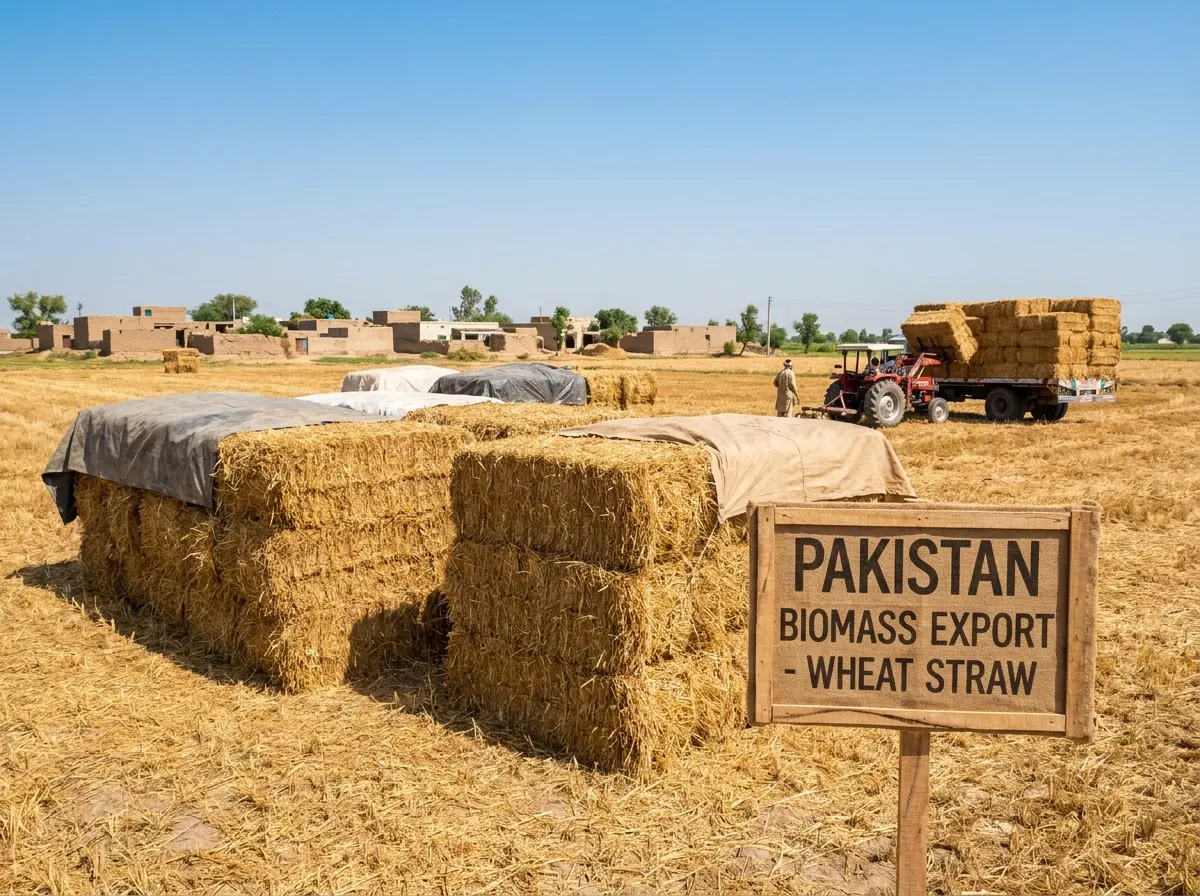
Main Biomass Product Categories Available from Pakistan
The main categories Pakistani processors work with include wheat straw (baled or pelletised), rice husk (raw or processed), sugarcane bagasse and cane trash, corn cob products in various grades, and cotton stalks. Each has different handling requirements and end-use applications, and not every processor handles every category — so matching a buyer's specific need to the right processor matters.
Where Global Demand for Biomass Comes From
Global demand for biomass products is driven largely by renewable energy targets in Europe and parts of Asia, where utilities and industrial boiler operators are working to reduce reliance on fossil fuels. Beyond energy, biomass residues also serve paper and pulp manufacturing, construction board production, and agricultural carrier applications — which means demand for the category isn't entirely tied to energy policy alone.
What Buyers Should Evaluate Before Sourcing
Key considerations include moisture content (which affects calorific value and storage), particle size and consistency (which affects processing suitability), ash content for fuel applications, and the processor's ability to provide consistent supply across multiple shipments. A trial order is standard practice before committing to larger volumes, and requesting a technical data sheet alongside a sample is advisable regardless of the product category.
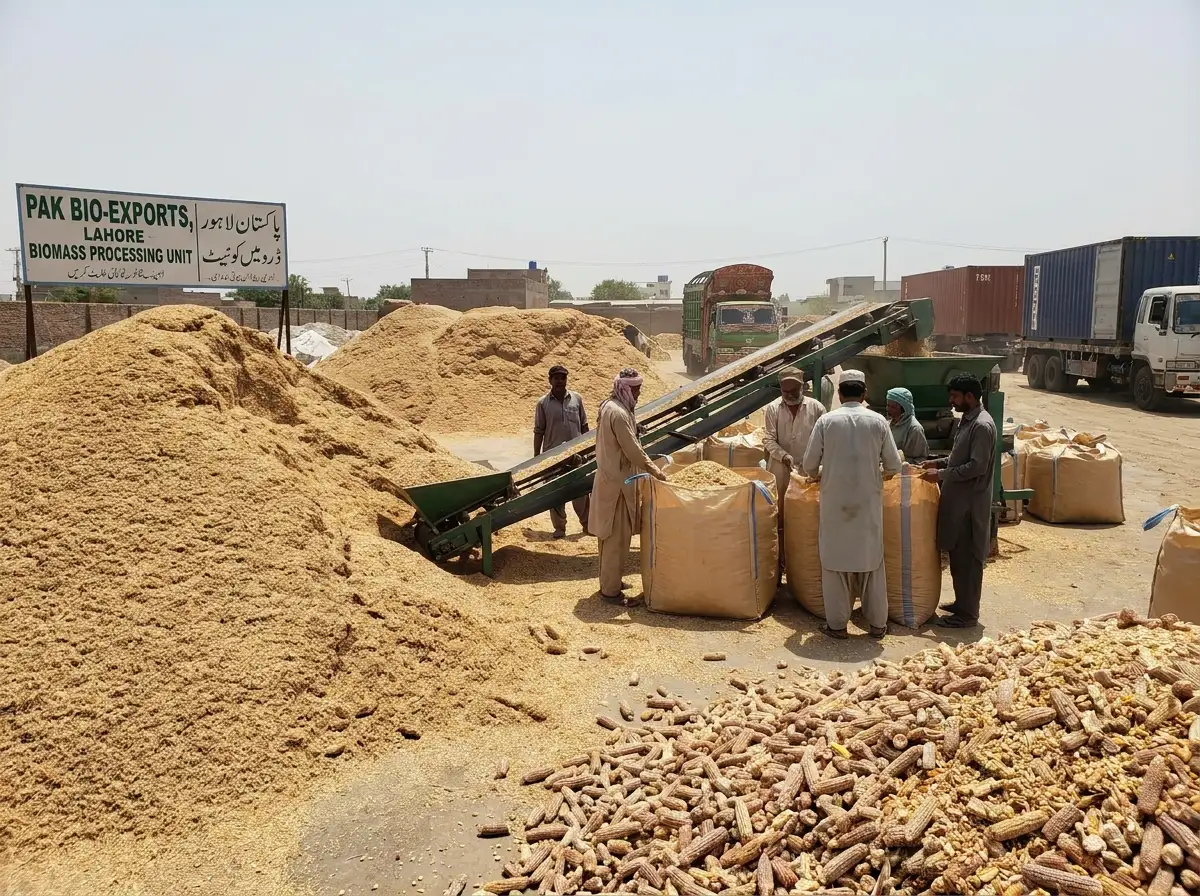
Pakistan's Position in the Global Biomass Trade
Pakistan is not yet a dominant name in global biomass trade the way it is in textiles or rice, but the underlying raw material base is substantial and processing capacity has been expanding steadily. For buyers looking to diversify sourcing away from more saturated origins, Pakistan offers a genuinely resource-rich alternative worth evaluating.
Sourcing Biomass Products from Pakistan
Daa Agri Limited works with agricultural processors across Pakistan's major crop-growing regions to supply corn cob, sugarcane residue, and other biomass products to international buyers — helping match technical specifications to the right processor and manage the logistics of first-time and ongoing orders.