
Biomass Briquettes vs Bio-Coal: Which Sustainable Fuel Is Better?
"Better" depends entirely on what you are trying to do. Briquettes and bio-coal are both densified biomass fuels, both sold as sustainable alternatives to fossil fuel, and both increasingly available from Pakistani processors. They differ enough in production, cost and combustion characteristics that the right choice comes down to your application.
How Briquettes and Bio-Coal Are Made
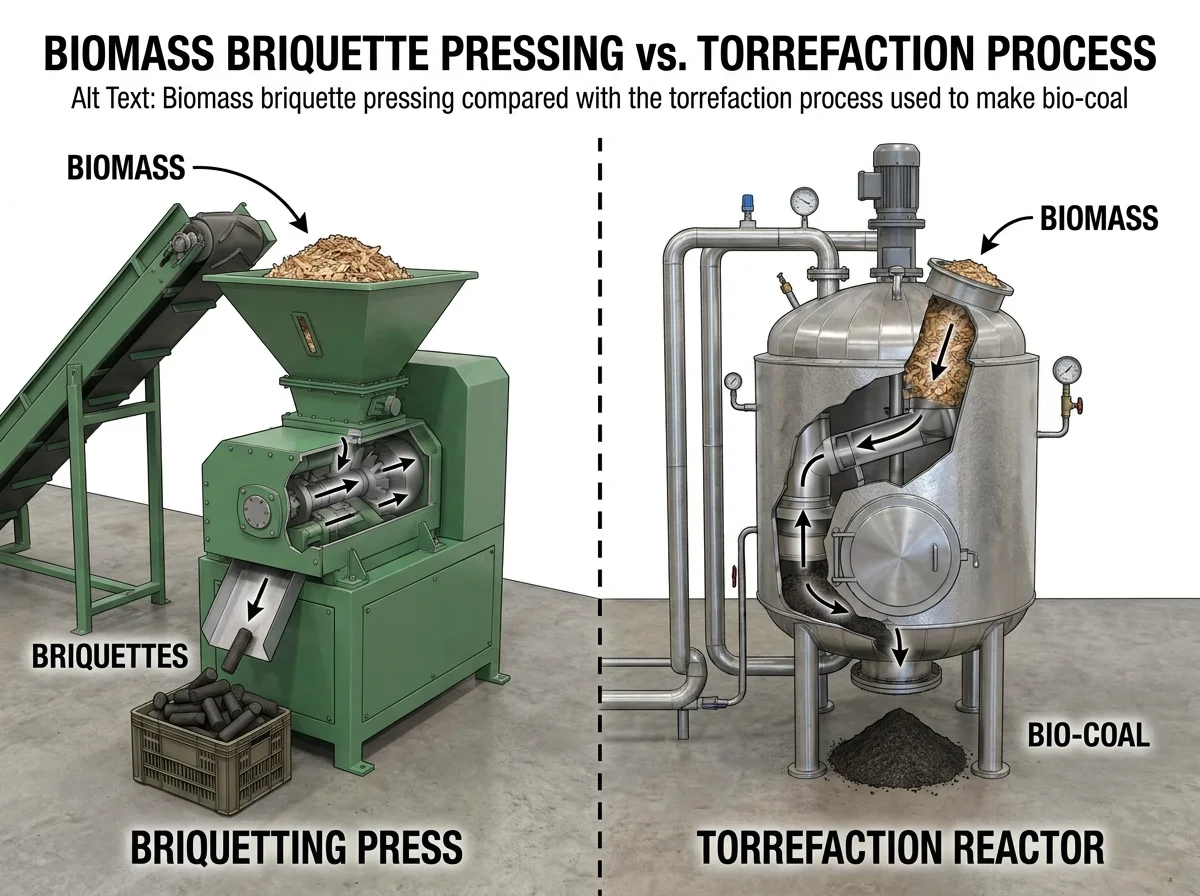
Briquettes are produced by mechanical compression alone. Dried, ground biomass is pressed under high pressure, and the natural lignin in the material acts as the binder. Bio-coal goes a step further. It involves torrefaction, a mild heat treatment at roughly 200°C to 300°C in a low-oxygen environment, which chemically alters the biomass so it behaves more like coal.
Comparing Biomass Briquettes and Bio-Coal
Energy Density
Bio-coal generally has higher energy density. Torrefaction removes moisture and volatile compounds, which concentrates the remaining energy content and makes bio-coal a closer match for coal on a like-for-like combustion basis.
Production Cost and Complexity
Briquetting is mechanically simple and comparatively inexpensive. Torrefaction needs more specialised equipment and more energy, so bio-coal is the more capital-intensive product to make.
Equipment Compatibility
Bio-coal is designed as a closer drop-in substitute for coal in existing combustion systems. Briquettes generally suit boilers already set up for solid biomass fuel, not pulverised coal handling.
Storage and Handling
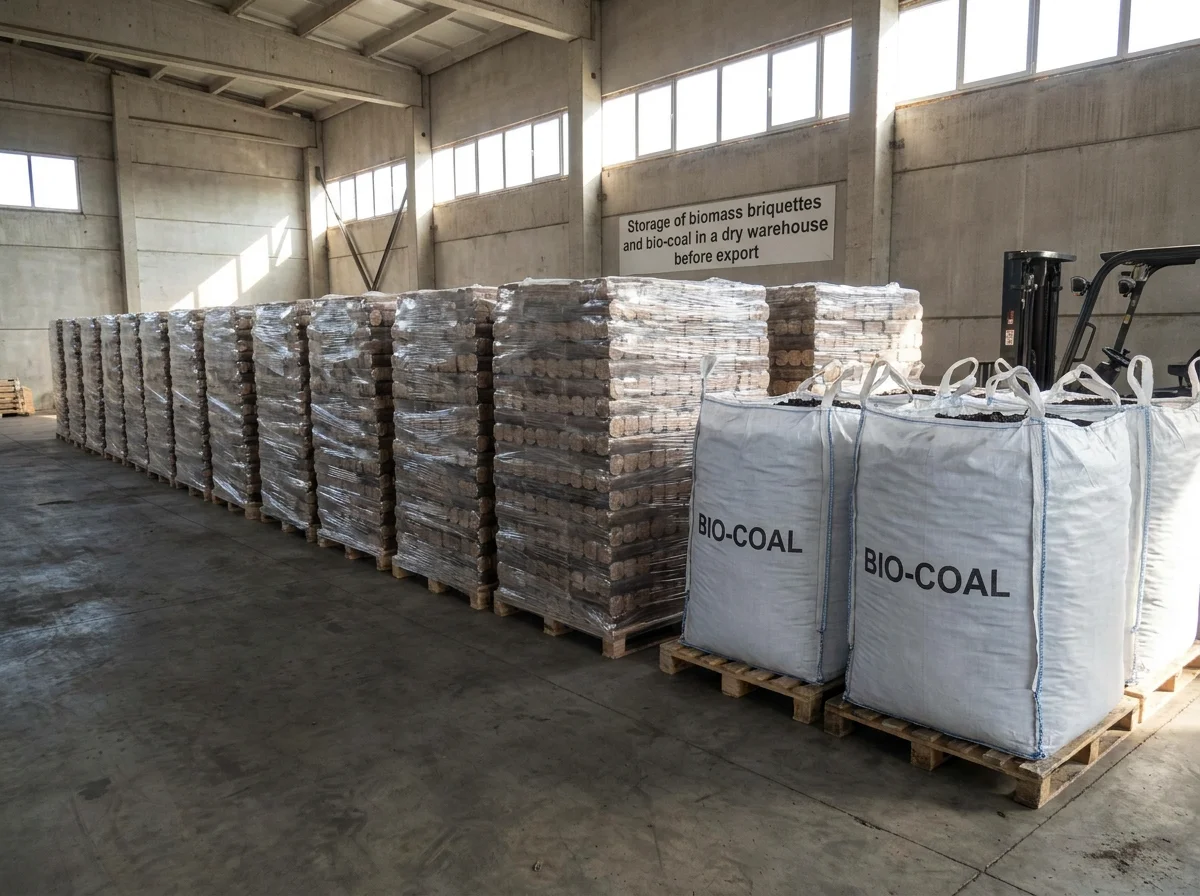
Bio-coal has lower moisture content and more coal-like physical properties, which usually gives it better storage stability. Briquettes are more prone to absorbing moisture and degrading gradually if they are not stored carefully.
Which Should You Choose?
Choose briquettes if you run a boiler configured for solid biomass, want a lower-cost fuel and are heating for general industrial purposes. Choose bio-coal if you need performance close to coal in existing equipment and can accept a higher production cost. Storage conditions should factor in either way, because briquettes need more care to keep dry.
Neither Is Universally Better
Industrial demonstrations show where each product earns its place. The EU-backed Torero project at ArcelorMittal's Ghent facility shows bio-coal succeeding in applications such as blast furnace injection, where coal-like performance is required. Briquettes, meanwhile, remain the more established, lower-cost choice for general industrial heating. The answer depends on your existing equipment and your budget, not on one product being categorically superior.
Sourcing Briquettes and Bio-Coal from Pakistan
Daa Agri Limited works with Pakistani processors producing biomass briquettes and, as capacity develops, bio-coal. The company can help buyers weigh the trade-offs against their own combustion equipment before committing to either product.