
Basmati Rice Import Requirements by Country (2026 Guide)
Importing basmati rice into a regulated market takes more than agreeing a price and booking freight. Each major destination has its own rules on documentation, food safety, pesticide residue limits and, in some cases, variety certification. Getting any of them wrong can lead to shipment rejection, border delays or financial penalties.
This guide summarises what buyers sourcing basmati from Pakistan need to know for the main destination markets, followed by the documents required almost everywhere.
European Union
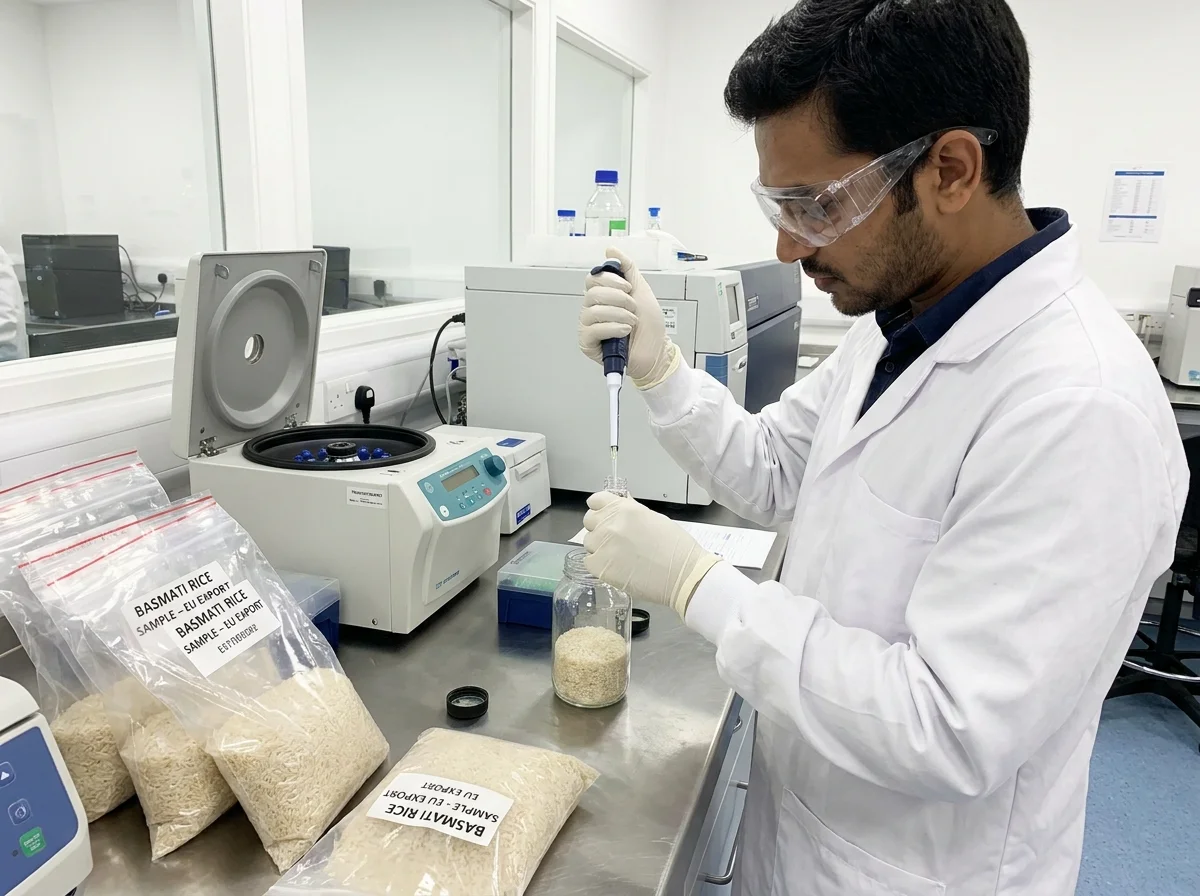
The EU applies some of the strictest food safety requirements for imported basmati. Under EU Regulation 2019/1793, Pakistani basmati is subject to enhanced border controls for pesticide residues and aflatoxins. Testing frequencies have changed in recent years and are reviewed periodically by the European Commission.
Maximum residue limits (MRLs) for pesticides are set by the European Food Safety Authority and apply equally to all origins. Acetamiprid, thiamethoxam and imidacloprid are among the substances most closely watched in basmati shipments. Buyers supplying the EU should make sure their suppliers pre-test shipments for pesticide residues before dispatch, because post-arrival rejections are costly and damage commercial relationships.
Basmati exported to the EU also benefits from a preferential import tariff, but only for approved varieties. Pakistan's approved varieties eligible for duty preference include Super Basmati, Basmati 370, Kernel Basmati and Basmati 386. A certificate of authenticity issued by the Trading Corporation of Pakistan is required to claim the preference. The EU Pesticide MRL Database is the reference point for current rice MRLs.
United Kingdom
Since Brexit, the UK has run its own food safety framework. It broadly mirrors EU standards but is administered independently. The UK Basmati Code of Practice 2017 sets labelling rules: rice can only be sold as basmati if at least 97% of the grains come from one declared country (India or Pakistan), and non-basmati content must not exceed 7%.
Pesticide MRLs follow UK-specific limits. They are currently aligned with EU levels for most relevant compounds but can diverge as regulations are updated, so confirm current requirements with your UK importer or a regulatory consultant before shipping.
United States
Rice imports into the US are regulated by the Food and Drug Administration (FDA). There is no basmati-specific certification scheme for US entry, but the FDA can place shipments on import alert if they have previously been found non-compliant. Its prior notice system also requires importers to give advance notice of food shipments before arrival.
US pesticide MRLs for rice differ from EU limits in some cases. Tricyclazole, for example, is permitted at 3 ppm in the US against 0.01 mg/kg in the EU. That gap affects which suppliers can serve both markets, so verify destination MRLs for all relevant pesticides with your customs or food safety consultant.
Middle East and Gulf Countries
Saudi Arabia, the UAE, Oman and other GCC countries are among the largest buyers of Pakistani basmati. Requirements differ by country but generally include a phytosanitary certificate, certificate of origin, commercial invoice, packing list and halal certification for food products. Saudi Arabia may also require prior registration of the exporting company and approval from the Saudi Food and Drug Authority (SFDA), depending on the product category.
Australia
Australia's Department of Agriculture applies strict biosecurity requirements to imported rice, including from Pakistan. Shipments must be treated for Khapra beetle (Trogoderma granarium) before export, and fumigation documentation must travel with the cargo. Treatment options include methyl bromide fumigation or approved alternatives carried out under certified conditions.
Standard Documents for Most Markets
Whatever the destination, basmati exports from Pakistan typically need the following:
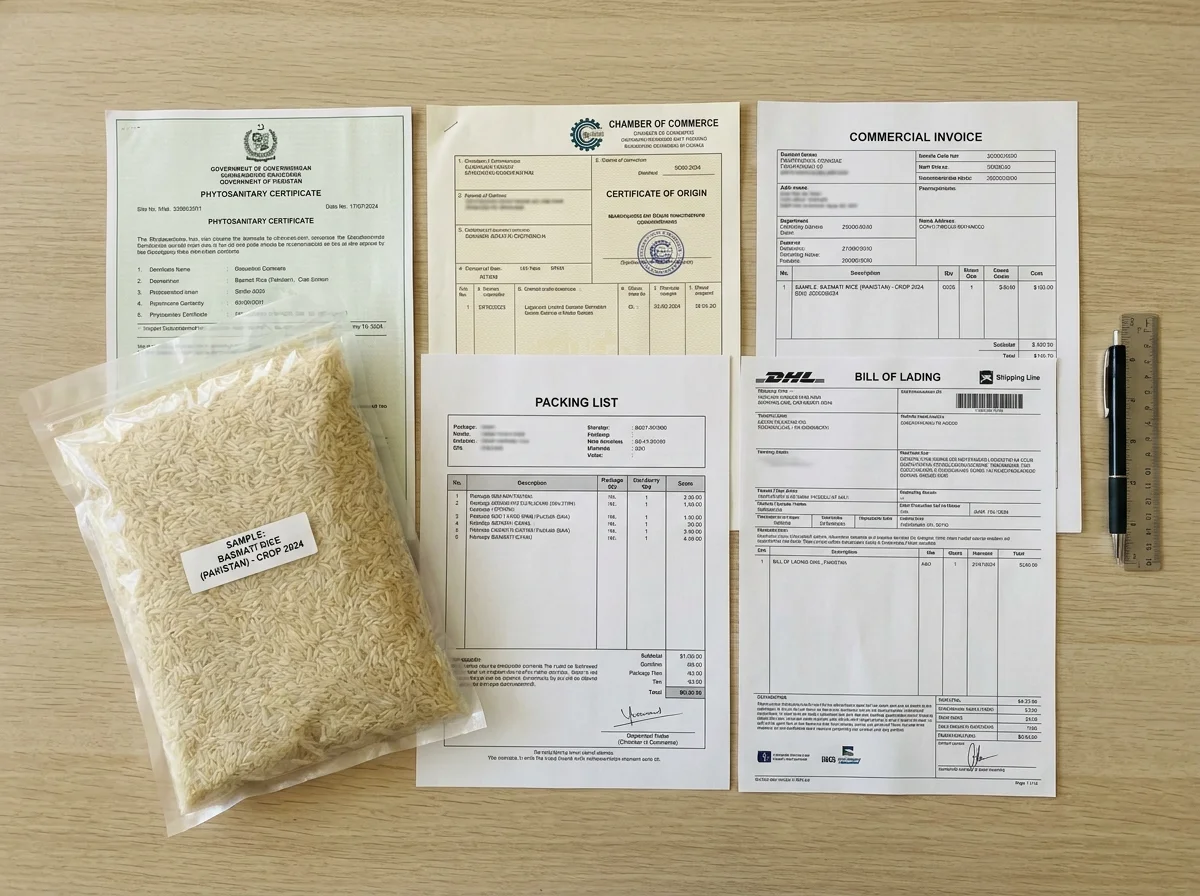
• Phytosanitary Certificate: Issued by Pakistan's Department of Plant Protection, certifying that the shipment is free from pests.
• Certificate of Origin: Issued by the Chamber of Commerce to verify Pakistani origin. Country-specific versions may be needed for preferential duty access.
• Commercial Invoice: Shows buyer, seller, quantity, unit price and total value.
• Packing List: Details the contents and packaging of the shipment.
• Bill of Lading: The contract of carriage and the key document of title for the goods.
Saremco Impex assists buyers with export documentation and can arrange pre-shipment inspection and third-party testing for destination markets. Sourcing enquiries can be sent through saremcoimpex.com.