
Pakistani Basmati Rice Exporters: What Buyers Should Know Before Sourcing
Pakistan is one of only two countries, alongside India, that produce authentic basmati rice. For international buyers that makes its export sector a significant sourcing option, particularly if you want premium long-grain aromatic rice at competitive prices. Working with Pakistani basmati rice exporters does call for an understanding of how the industry is structured, what quality assurance looks like and what to verify before committing to a supplier.
Pakistan's Position in Global Basmati Trade
Pakistan's rice export sector has grown substantially in recent years. According to the Pakistan Bureau of Statistics, rice exports crossed 5 million tonnes in FY2023-24, generating over $3 billion in export value. Basmati commands a significant premium per tonne over non-basmati, with average basmati export prices running well above $1,000 per tonne in recent years.
Despite competition from India, Pakistan has built a strong position in quality-sensitive markets. As of early 2025, Pakistan held approximately 67% of the basmati brown rice market in the EU and UK, where phytosanitary requirements and quality standards are strict. That share reflects consistent investment in quality, not just price competition. The Rice Exporters Association of Pakistan (REAP) publishes periodic industry data on the sector.
Key Basmati Varieties Exported from Pakistan
Pakistani basmati exporters mainly deal in three varieties:
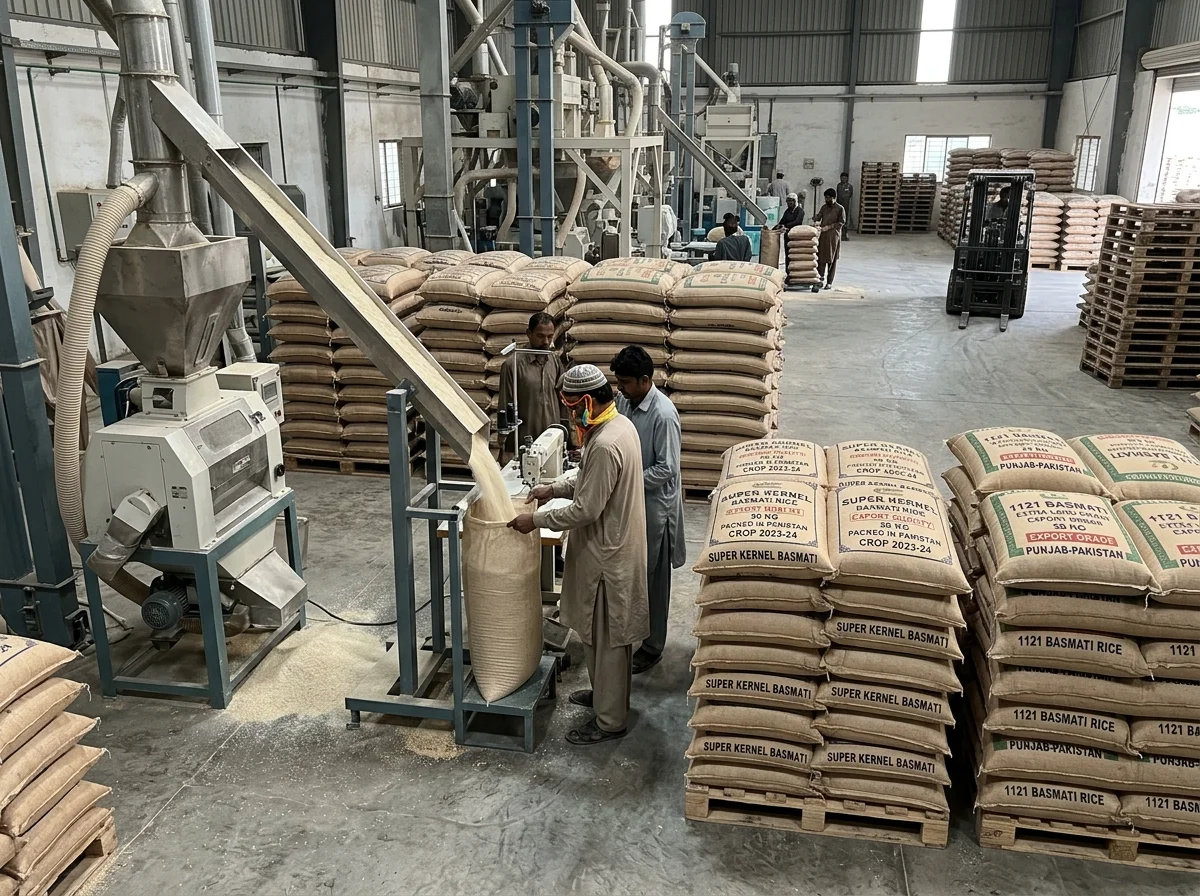
• Super Kernel basmati: Pakistan's traditional export variety, known for its pronounced aroma and long, slender grains. Grown mainly in Punjab's Gujranwala, Hafizabad and Sheikhupura districts.
• 1121 basmati (Kainat): the extra-long grain variety with exceptional elongation on cooking. It is gaining market share quickly thanks to high yield and strong commercial appeal, and is available as white, steam, sella and golden sella.
• Basmati 385 (PK-385): an older traditional variety with a distinct aroma. Still traded, though 1121 and Super Kernel dominate volumes.
Non-basmati varieties such as IRRI-6 and IRRI-9 are also exported in large volumes, mainly to African and Asian markets, but they sit outside the premium basmati category.
How Quality Is Managed
Reputable Pakistani basmati exporters work within a quality framework that has several layers of verification:
• PSQCA certification: the Pakistan Standards and Quality Control Authority sets quality benchmarks for rice intended for export. PSQCA certification indicates that the exporter meets Pakistani national quality standards.
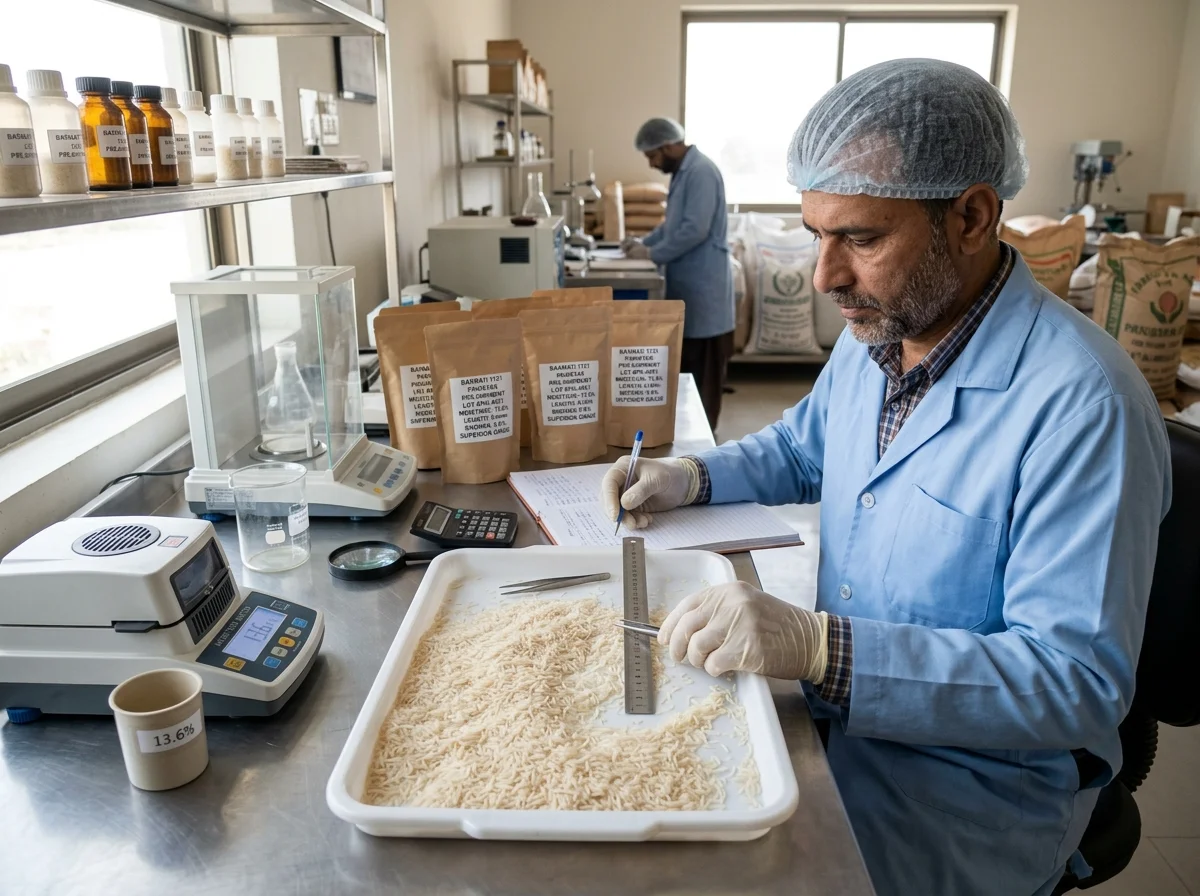
• Third-party inspection: large buyers, particularly in Europe, the UK and North America, typically require pre-shipment inspection by accredited international agencies such as SGS, Intertek or Bureau Veritas. These inspections check grain specifications, moisture content, broken percentage and contaminant levels against the agreed contract.
• Phytosanitary certificates: required for all agricultural exports. Issued by Pakistan's Department of Plant Protection, the certificate confirms the shipment is free from pests and diseases and meets the importing country's agricultural requirements.
• Halal certification: required for basmati exports to certain markets. Buyers supplying Muslim-majority markets or retailers with halal requirements should confirm the exporter can provide it.
What to Verify Before Placing an Order
Like any commodity market, Pakistan's rice export sector has suppliers across a wide range of quality and reliability. Before you commit:
• Request a pre-shipment sample from the actual production batch, not a reference sample, and test it for grain length, moisture and aroma before confirming the order.
• Check the exporter's registration and trade credentials. Established exporters have documented export histories and can provide references from previous buyers.
• Confirm the milling and processing facility. Reputable exporters run or source from certified mills with sortex cleaning, moisture control and proper storage.
• Clarify documentation, specifically which certificates are included in the FOB price and which must be arranged separately.
• Agree quality parameters in writing in the contract. Broken percentage, moisture content and grain length tolerances should be stated explicitly, along with the inspection standard to be applied.
Trading Company vs Direct Exporter
Some buyers deal directly with rice mills and processors, while others use trading companies that source from several mills. Both approaches have merit, depending on order size and the flexibility you need. Direct mill sourcing can offer better pricing at scale but needs more due diligence on the mill's capabilities. Trading companies often give more flexibility on variety, grade and packaging, and suit buyers placing smaller or more varied orders.
Sourcing Basmati Rice from Pakistan
Saremco Impex is a Pakistan-based trading company with direct sourcing access to basmati rice from Punjab's key producing districts. It handles export documentation, quality verification and customised packaging for international buyers. To discuss requirements or request a product specification sheet, visit saremcoimpex.com.