 Animal Lick Salt
Animal lick salt from Pakistan. Natural lumps and compressed blocks. H...
Inquire Now
Find minerals, agricultural goods and more
Himalayan pink salt animal lick blocks and natural lumps from Pakistan for livestock, equine and wildlife nutrition
Animal lick salt from Pakistan. Natural lumps and compressed blocks. Himalayan pink salt with 84+ trace minerals. For cattle, horses, sheep, goats, wildlife. Price on inquiry, shipped from Karachi.
Salt is an essential dietary requirement for all livestock, equine, and wildlife species. Sodium and chloride are critical for nerve function, muscle contraction, fluid balance, and nutrient absorption. Animals cannot produce these minerals internally and must obtain them from their diet or from salt supplementation. Salt licks allow animals to self-regulate their mineral intake by licking as needed, which is the most natural and stress-free supplementation method. Himalayan pink salt licks from Pakistan are the premium product in this category, valued for their natural trace mineral content, attractive pink colour, hardness, and weather resistance.
Material: 100% natural Himalayan pink salt (Khewra Mine)
NaCl: 98-99%
Trace Minerals: 84+ naturally occurring
Iron (Fe): 30-150 ppm (responsible for pink colour, also a nutritional trace mineral)
Calcium (Ca): 0.1-0.2%
Magnesium (Mg): 0.05-0.1%
Potassium (K): 0.1-0.2%
Zinc (Zn): 2-5 ppm
Selenium (Se): < 0.5 ppm
Moisture: < 0.5%
Additives: None (no binders, no artificial colours, no chemical additives)
Hardness: Dense, hard crystalline structure (resists rapid dissolution in rain)
Colour: Light pink to deep rose
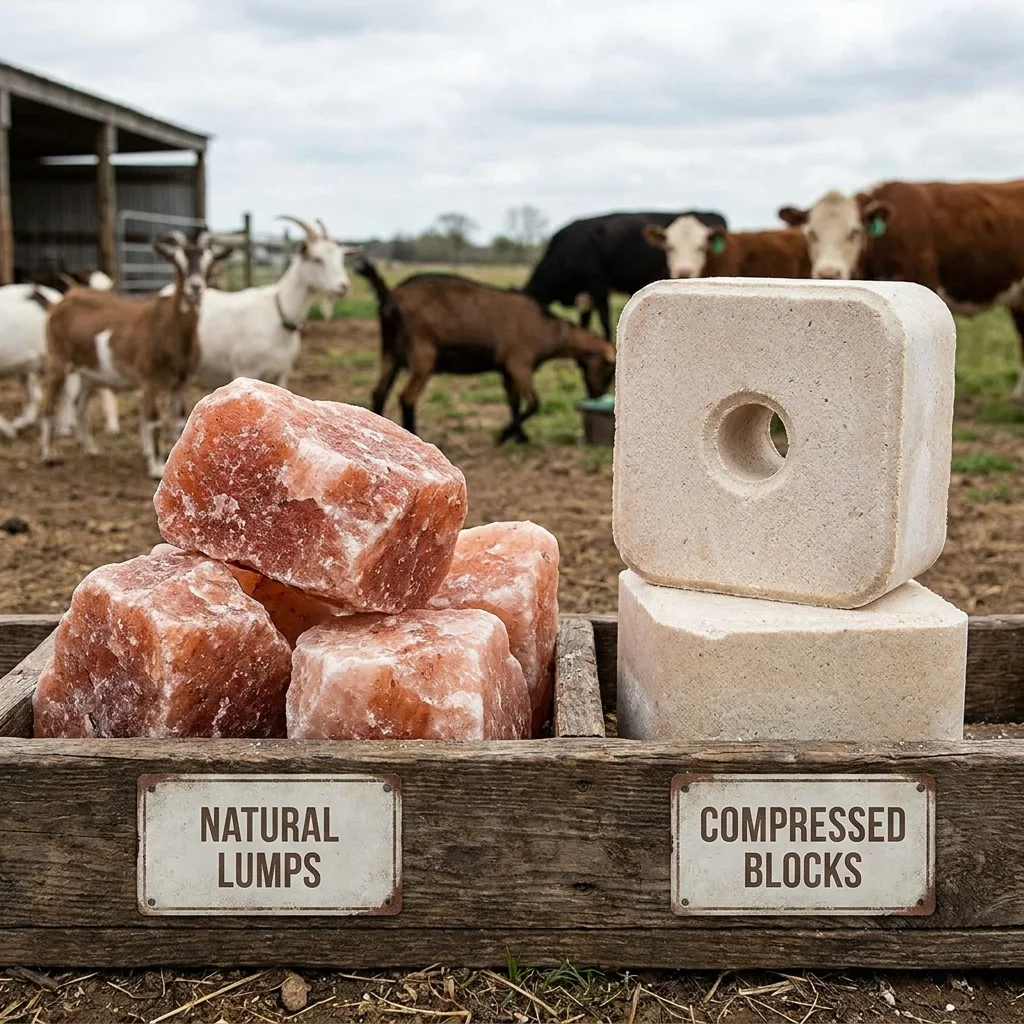
Natural Lumps
Hand-selected irregular pieces of raw Khewra mine salt in their natural mined form. Each lump is unique in shape and colour. A hole is drilled through the centre or a groove is cut around the top for a hanging rope. Natural lumps are the original, most authentic format, popular with equine owners, hobby farmers, and premium pet/livestock retail markets.
Sizes: 2-3 kg, 3-5 kg, 5-8 kg, 8-12 kg, 12-25 kg
Hole drilled: Yes (for rope hanging)
Rope included: Available on request (cotton or nylon)
Shape: Natural irregular (each piece unique)
Best for: Horses, stables, paddocks, hobby farms, premium retail, wildlife feeders
Compressed Blocks
Manufactured by crushing Himalayan pink salt into granules, then hydraulically pressing into uniform rectangular or cylindrical blocks at high pressure. Compressed blocks have consistent shape, weight, and density, making them easier to stack, ship, and merchandise. They fit standard salt lick holders used in dairy, cattle, sheep, and goat operations.
Rectangular blocks: 2.5 kg, 5 kg, 10 kg, 25 kg, 50 kg
Cylindrical blocks: 2.5 kg, 5 kg
Shape: Uniform rectangular or cylindrical
Density: High compression, slow dissolution
Surface: Smooth pressed or rough textured
Best for: Dairy farms, cattle feedlots, sheep and goat operations, wildlife management, agricultural retail
Dairy cattle and buffalo: Salt supplementation is essential for milk production. Lactating dairy cows require 30-50 g of salt per day. Salt lick blocks placed in barns, milking parlours, and pastures allow cows to self-regulate their sodium intake, supporting optimal milk yield, rumen function, and overall health
Beef cattle and feedlots: Beef cattle in grazing and feedlot operations use salt licks to maintain electrolyte balance, appetite, and feed efficiency. Salt blocks are placed in pastures, feed bunks, and holding pens
Horses and equine: Himalayan pink salt licks are the premium standard in the equine market. Horses require 10-20 g of salt per day (more during exercise and hot weather) for muscle function, hydration, and electrolyte replacement. Natural lumps with a hanging rope are the most popular format in stables and paddocks
Sheep and goat: Small ruminants require regular salt supplementation for fertility, lactation, wool growth, and general health. Smaller compressed blocks (2.5-5 kg) are placed in pens, shelters, and grazing areas
Camels: Salt supplementation is critical for camels in arid environments. Large natural lumps and 25-50 kg compressed blocks are used in camel herds across the Middle East and North Africa
Wildlife management: Salt lick blocks and natural lumps are placed at wildlife feeding stations, game reserves, deer management areas, and hunting zones to attract and supplement wild herbivores (deer, elk, moose, antelope)
Poultry: While poultry typically receive salt in their formulated feed, free-range and organic poultry operations sometimes provide small salt licks for supplementary mineral access
Zoo and sanctuary animals: Salt licks are provided to captive herbivores (elephants, giraffes, zebras, bison, antelope) in zoos, wildlife sanctuaries, and animal parks
Pet retail: Small natural lumps (1-2 kg) and mini compressed blocks are sold in pet stores for rabbits, guinea pigs, hamsters, chinchillas, and other small pets
Each lot includes a Certificate of Analysis reporting NaCl, iron, calcium, magnesium, potassium, zinc, heavy metals (Pb, As, Hg, Cd), and moisture. All lick salt is produced from food-grade Himalayan pink salt with no additives. Compressed blocks are tested for hardness and dissolution rate. Natural lumps are individually inspected for crystal integrity and hole/groove quality. Pre-shipment samples are provided for buyer approval.
Detailed specifications are available on request. Send us your requirement and our export desk will share them.
Natural Lumps:
Individual shrink-wrap with product label
Packed in corrugated cartons or wooden crates (4-8 lumps per carton depending on size)
Rope included or packed separately
Compressed Blocks:
Individual shrink-wrap with printed label or sleeve
Packed in corrugated cartons (2-6 blocks per carton depending on size)
25 kg and 50 kg blocks shrink-wrapped and palletized
Retail packaging:
Colour-printed retail box (for natural lumps with rope)
Branded shrink-wrap sleeve (for compressed blocks)
Private label and custom branding available for all sizes
Loading port: Karachi Port or Port Qasim. Containerized shipment. Salt licks are dense and heavy. Typical load: 22-26 MT per 20ft container. Natural lumps require more cushioning than compressed blocks. Incoterms: FOB, CFR, CIF, DDP. Documents: Commercial Invoice, Packing List, Certificate of Origin, Certificate of Analysis, Veterinary Health Certificate (if required by destination), Phytosanitary Certificate (if required), Bill of Lading.
Animal Lick Salt
Animal lick salt from Pakistan. Natural lumps and compressed blocks. H...
Inquire NowSubmit a Buying Requirement at DaaTrade.com
Submit Requirement