
Basmati Rice Price Trends 2026: What Buyers Need to Know
Basmati prices have moved a great deal over the past two to three years, shaped by Indian export policy, Pakistani production cycles, currency shifts and changing demand in the Gulf, Europe and elsewhere. For buyers placing orders in 2026, knowing what drove the recent changes and what still influences the market is useful context for procurement planning.
Where Prices Have Come From
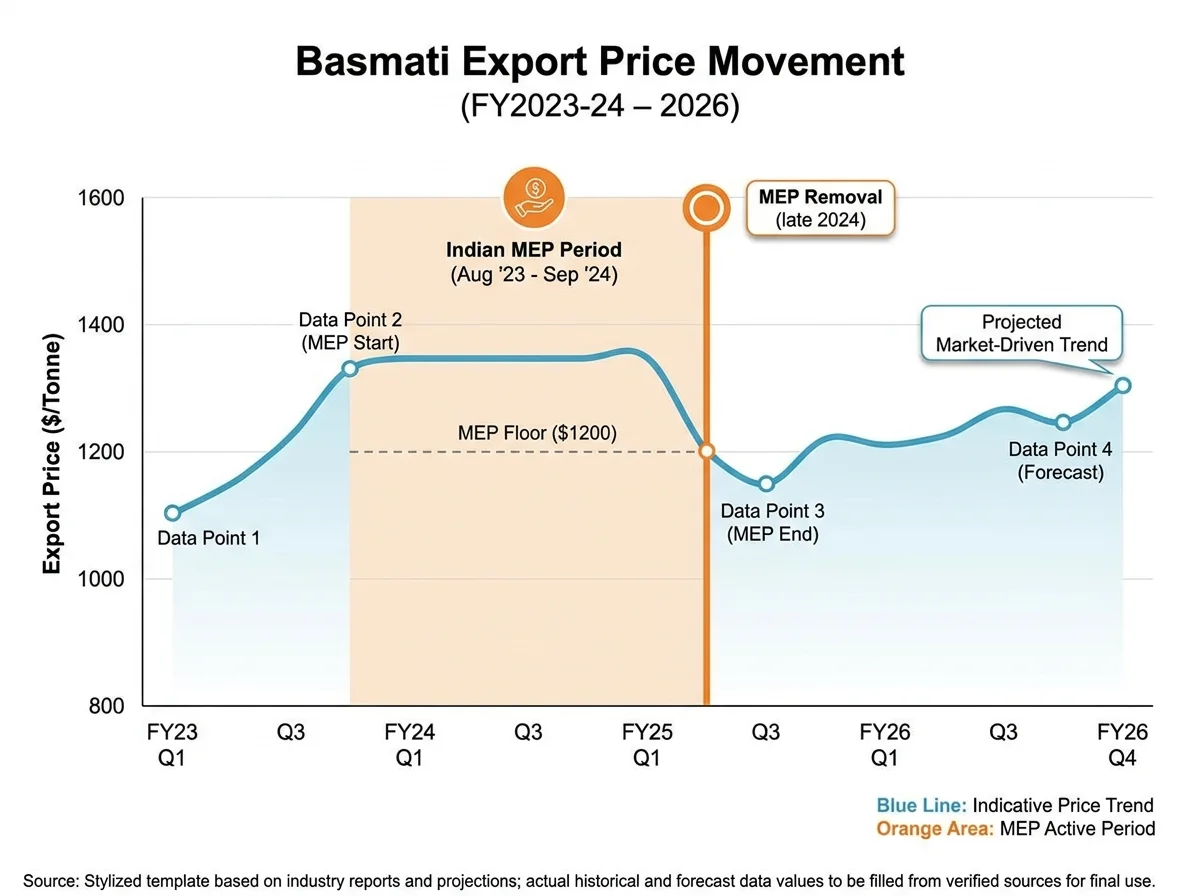
2023 to 2024 was an unusually volatile period. India restricted non-basmati rice exports in mid-2023, and floods hit some Pakistani rice-growing areas in 2022, both of which pushed global rice prices higher. Pakistan's basmati export price averaged above $1,100 per tonne for much of FY2023-24, while Indian basmati was briefly subject to a Minimum Export Price (MEP) of $1,200 per tonne set by New Delhi to prevent domestic shortages. S&P Global Commodity Insights has tracked the interplay between the two exporters closely.
India lifted its export restrictions and removed the MEP floor in late 2024, and Pakistani exporters faced renewed competition. Pakistan responded by concentrating on consistent quality and holding its position in the EU and UK, where it had a dominant share of the brown basmati segment, rather than starting a price war. Pakistani basmati stayed competitive, although prices eased from the 2023-24 peaks.
The India-Pakistan Price Dynamic
The relationship between Indian and Pakistani basmati pricing is among the most important variables for international buyers. When India applies an MEP or export restrictions, Pakistani rice gains a price advantage and order flow rises. When India returns at competitive prices, Pakistani exporters come under margin pressure.
In 2025 and 2026 both origins are competing actively. Pakistani basmati has been priced broadly in line with, or slightly below, Indian basmati in several markets, which makes it attractive to buyers who can accept either origin. In the EU and UK, where Pakistani basmati has built a reputation for quality, suppliers have been able to hold a price premium over comparable Indian product.
In the US, differing tariff treatment has opened a price gap between the two origins, and buyers supplying the American market should factor it into their sourcing calculations.
Factors That Drive Basmati Prices
Buyers planning procurement should know what actually moves the price:
• Crop production: Both countries produce kharif rice, sown in summer and harvested in autumn. The October and November harvest has the most direct effect on prices for the following export season. A good harvest in both countries usually softens prices, while a poor crop in one creates an opening for the other.
• Indian export policy: India's government periodically uses Minimum Export Prices and export restrictions to protect domestic supply. These measures have historically caused large price swings in international basmati markets and created sourcing opportunities for Pakistani exporters.
• Pakistani rupee exchange rate: A weaker rupee makes Pakistani rice cheaper in dollar terms and can give exporters a pricing edge. It was a significant factor in Pakistan's export growth in FY2023-24.
• Freight costs: Container rates from Pakistani ports to destination markets, particularly the Gulf and Europe, affect landed cost. Red Sea disruption and wider container rate volatility have made landed costs harder to predict in recent years.
• Gulf demand: Saudi Arabia, the UAE, Iraq and Iran are the largest buyers of basmati globally. Shifts in demand there, driven by currency movements, government procurement decisions and local economic conditions, feed through to export pricing.
What This Means for Buyers in 2026
The 2026 market is more competitive than 2023-24. Both India and Pakistan are exporting actively, and prices have moderated from the peaks of that period. In practical terms:
• Prices are generally more negotiable than during the restricted-supply period of 2023-24.
• Fixing contract pricing for a set volume and period can protect against seasonal swings around the harvest.
• Buyers who can accept either origin have more leverage on price than those limited to one.
• Quality premiums remain. Aged basmati and high-grade sortex-cleaned rice still command more than standard grade, and that premium has stayed reasonably stable.
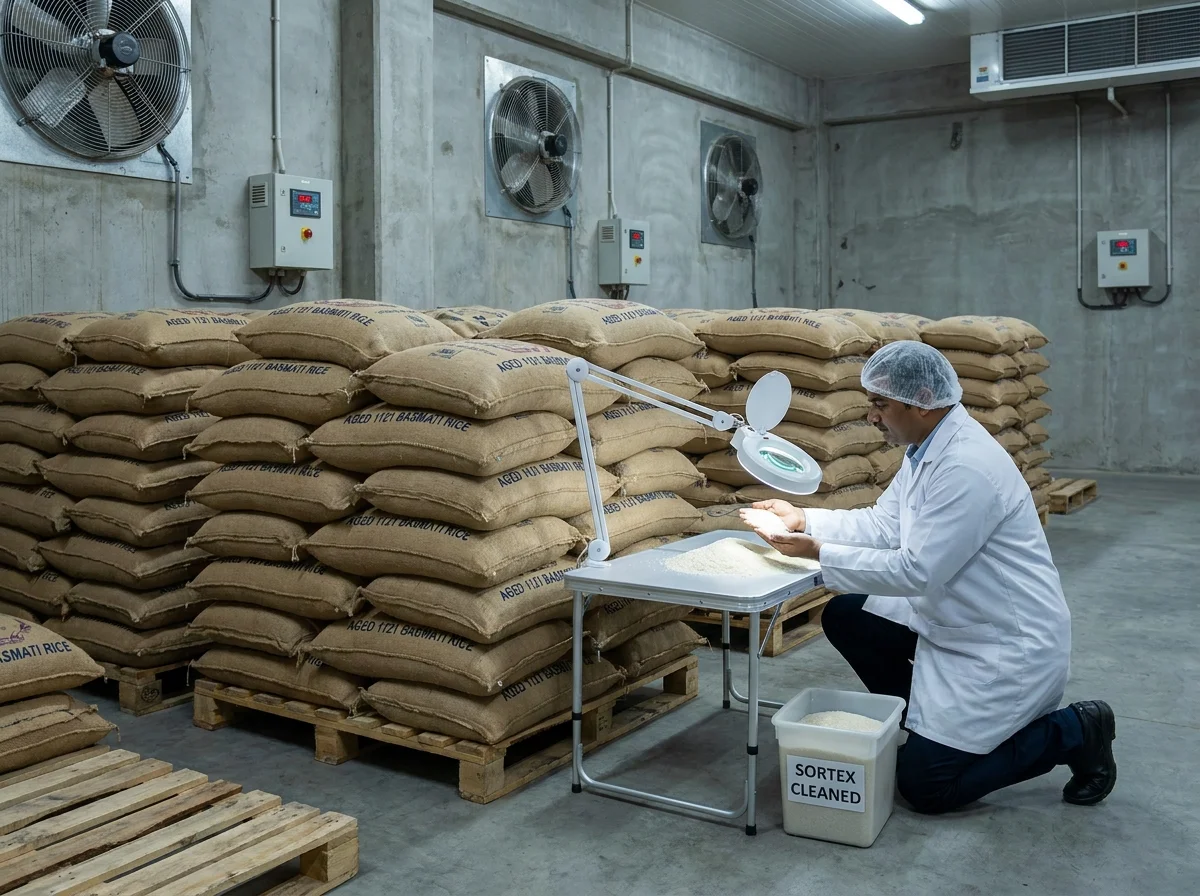
Saremco Impex can provide current pricing and availability for 1121 basmati and Super Kernel basmati in all processing types. For a price indication and specifications, visit saremcoimpex.com.